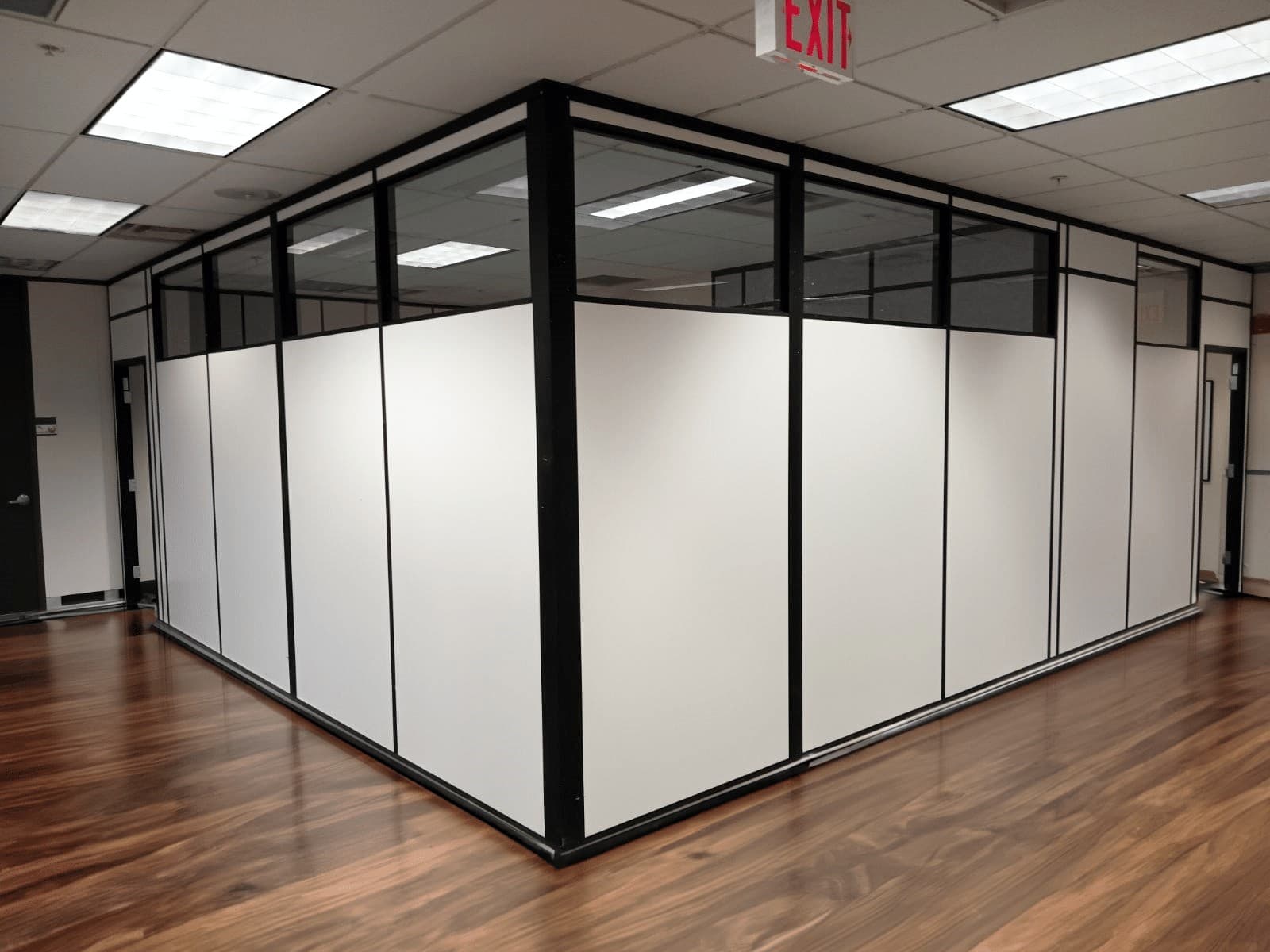
What Our Tenant Improvement Construction Scope Covers
General Contractors of Denton delivers tenant improvement construction for landlords, tenants, and owner-users across Denton County's commercial, retail, office, industrial, and medical office markets. The Denton tenant base is unusually diverse — UNT's 46,000 students and TWU's 15,000 students generate demand for student-facing retail, fast-casual restaurant, and service commercial tenant improvements that require high-turnover finish quality and fast delivery timelines. Peterbilt, Sally Beauty, Tetra Pak, and Jostens generate corporate office improvement demand with higher finish expectations and technology infrastructure requirements. The medical office market around DCH-1, Texas Health Presbyterian Denton, and Medical City Denton generates healthcare interior improvements with specific life-safety, MEP, and accessibility requirements.
Tenant improvement construction requires a contractor who understands the specific requirements of each tenant type — not one who applies the same construction approach to every improvement regardless of the intended use. A fast-casual restaurant tenant improvement requires grease-trap coordination, exhaust hood integration, commercial kitchen MEP sequencing, and health department inspection coordination. A medical office improvement requires HIPAA-compliant access design, specific MEP requirements for exam room infrastructure, and life-safety sequencing. A student-facing retail improvement requires fast delivery on a UNT-semester timeline and finish quality that performs under high-traffic student use.
We coordinate tenant improvements as part of one managed delivery scope — from the design coordination that confirms the base-building infrastructure is adequate for the improvement scope through the final health department or certificate-of-occupancy inspection that authorizes the tenant to open.
Tenant improvement construction is delivered as a coordinated interior scope from design coordination through permit, construction, and move-in readiness.
- Base-building infrastructure verification — electrical capacity, HVAC provisions, plumbing rough-ins, and fire protection classification — before interior design is locked.
- Permit coordination through City of Denton Building Inspections for commercial tenant improvements and specialty permits for food service, medical, and other regulated uses.
- Interior framing, insulation, and drywall coordinated with MEP rough-in sequencing.
- Mechanical HVAC design and installation coordination for the specific tenant use — office zoning differs from restaurant exhaust and make-up air design.
- Electrical improvements — service upgrades, panel distribution, lighting, and technology infrastructure for the specific tenant program.
- Plumbing improvements — restroom buildout, break room, restaurant kitchen, and medical-grade plumbing as required by the tenant type.
- Finish coordination — flooring, ceiling systems, paint, cabinetry, and millwork appropriate for the tenant's finish level and budget.
- Final inspections and certificate-of-occupancy coordination with City of Denton Building Inspections and applicable specialty inspectors.
How We Deliver Tenant Improvement Construction in Denton County
Tenant improvement delivery is organized around the tenant's opening date and the specific inspection requirements of the tenant use type. Permit timelines and specialty inspection requirements shape the delivery schedule.
Base-Building Review and Design Coordination
We begin every tenant improvement with a review of the base-building infrastructure against the improvement design. Electrical service capacity, HVAC distribution adequacy, plumbing rough-in location compatibility, and fire suppression classification all have to be confirmed before the interior design is locked. Improvements that discover base-building inadequacies after the permit is submitted face expensive redesigns and delays. We surface those issues before design investment is committed.
Permit Coordination and Specialty Permits
City of Denton Building Inspections issues tenant improvement permits for commercial interiors. Food service improvements require Denton County Health Department coordination. Medical office improvements require specific life-safety reviews. We identify all applicable permits and specialty inspections before construction begins and build their timelines into the delivery schedule so tenant opening dates are protected.
MEP and Framing Coordination
Interior framing and MEP rough-in are coordinated to proceed in the sequence that keeps the project moving without creating rework. In active tenant improvement construction — where the project may be occupying part of a building while adjacent bays remain occupied — we establish noise and dust control boundaries and work-hour restrictions required by the landlord or other tenants.
Finish Installation and Inspection Preparation
Finish installation is sequenced from the top down — ceiling systems before flooring, painting before casework — so finish trades do not damage each other's work. We track inspection hold points for rough-in inspections, above-ceiling inspections, and final inspection throughout finish installation so the certificate-of-occupancy application is ready immediately after punch completion.
Punch and Move-In Readiness
Punch closure and move-in preparation are managed together so the tenant can begin operations on the confirmed opening date. For restaurant improvements, that includes health department final inspection coordination. For medical office, it includes confirming accessible route compliance and equipment placement readiness. For retail, it includes signage and storefront glass installation confirmation.
Tenant Improvement Types in Denton County
Denton County's diverse tenant base generates tenant improvement demand across a wide range of uses, each with different construction requirements.
University-Adjacent Retail and Restaurant
Student-facing retail and fast-casual restaurant tenant improvements near UNT, TWU, and NCTC require fast delivery timed to university academic calendars, durable finish materials that perform under high-traffic student use, and restaurant kitchen MEP coordination for food service operations. Health department inspection coordination is required for food service improvements.
Medical Office and Healthcare
Medical office tenant improvements for practices near DCH-1, Texas Health Presbyterian Denton, and Medical City Denton require specific plumbing provisions for exam rooms, HVAC design for infection control, accessible route compliance, and security and access control design. Healthcare improvements have longer design and permit timelines than standard commercial interiors.
Corporate Office and Headquarters
Corporate office tenant improvements for Denton County employers — including companies in the Sally Beauty, Peterbilt, and Tetra Pak supply chains — require higher finish levels, technology infrastructure coordination, and security system integration than standard commercial office improvements.
Industrial Tenant Build-Out
Industrial tenant improvements in Denton County warehouse and flex shells require electrical service upgrades for manufacturing or distribution equipment, overhead door additions, restroom buildout to meet occupancy code requirements, and sometimes above-slab mechanical coordination for specialized equipment.
Why Landlords and Tenants Choose General Contractors of Denton for Tenant Improvements
Tenant improvement success in Denton County depends on completing the right work in the right sequence — base-building review before design is locked, permit coordination before construction mobilizes, and specialty inspections scheduled before the opening date pressure arrives. Contractors who skip the front-end coordination steps typically deliver tenant improvements with last-minute inspection failures and missed opening dates.
We understand the specific requirements of Denton County's diverse tenant types — UNT-adjacent restaurant and retail, medical office serving the county's three hospital systems, corporate office for Denton's major employers, and industrial build-out for the manufacturing and logistics tenants along I-35 and US-380. Each tenant type has different construction requirements, permit processes, and opening-date pressures.
For landlords managing multi-tenant properties in active markets like Loop 288 and the US-380 corridor, we deliver tenant improvements that meet the landlord's schedule expectations without disrupting other occupants or damaging the base-building systems that subsequent tenants will depend on.
Tenant improvement construction work is available throughout Denton, Corinth, Lake Dallas, Lewisville, Carrollton, The Colony, Little Elm, Flower Mound, and across Denton County.
Nearby Denton markets for this service
Denton
Denton is the county seat and economic center of Denton County — home to the University of North Texas (46,000+ students), Texas Woman's University, Peterbilt Motors, Sally Beauty Holdings, and a manufacturing base that has anchored the north DFW economy for generations. Commercial and industrial construction here serves a market shaped by university growth, established corporate campus programs, and the ongoing US-380 corridor explosion that is pulling new development east and west of the city.
View marketCorinth
Corinth sits at the southern end of Denton County along I-35E, positioned between Denton and the Lewisville Lake recreation zone with direct highway access to the Dallas–Fort Worth core. The city has attracted retail, office, and service commercial development serving the south Denton County residential base, and its I-35E frontage creates industrial and logistics potential that the surrounding residential growth is beginning to activate.
View marketLake Dallas
Lake Dallas is a small city on I-35E at the Lewisville Lake shoreline, serving as a commercial service node for the lake-adjacent residential communities of south Denton County. Commercial construction here is primarily service commercial, retail, and light industrial — serving the lakefront population and the I-35E traffic corridor between Denton and Lewisville.
View marketHickory Creek
Hickory Creek is a small south Denton County city on I-35E between Lake Dallas and Highland Village, positioned at the Lewisville Lake-adjacent zone where highway-facing commercial development serves the south Denton County residential market and the lake-adjacent recreation economy. Commercial construction opportunities focus on I-35E corridor retail, service commercial, and light industrial.
View marketArgyle
Argyle is southwestern Denton County's premier address — an Argyle ISD community anchored by the Robson Ranch 55+ master-planned community and the equestrian estate properties along the I-35W corridor. Commercial construction here serves a high-income residential base, equestrian facilities, and the growing US-377 commercial zone serving south Denton County's most affluent market segment.
View marketFrequently asked questions
How long does a commercial tenant improvement permit take in City of Denton?
Commercial tenant improvement permit review in City of Denton typically takes 10 to 20 business days for standard interior improvements. Food service improvements with kitchen equipment coordination and medical office improvements with life-safety review may take longer. We submit complete permit packages — including all required MEP drawings — on the first submission to avoid correction cycles that add time to the review.
Who is responsible for base-building upgrades needed to support a tenant improvement in Denton County?
Base-building upgrades required to support a tenant's program — such as electrical service upgrades, fire suppression system extensions, or ADA path-of-travel improvements — are typically the subject of landlord-tenant lease negotiation. We identify those requirements during the pre-design base-building review so the parties understand the cost allocation before construction contracts are signed.
Can General Contractors of Denton manage tenant improvement construction on an occupied floor or active retail strip?
Yes. We regularly deliver tenant improvements in buildings where other tenants are operating in adjacent spaces. We establish noise and dust control protocols, work-hour restrictions, and access separation plans required by the landlord and other occupants so construction does not disrupt neighboring businesses or violate lease provisions.