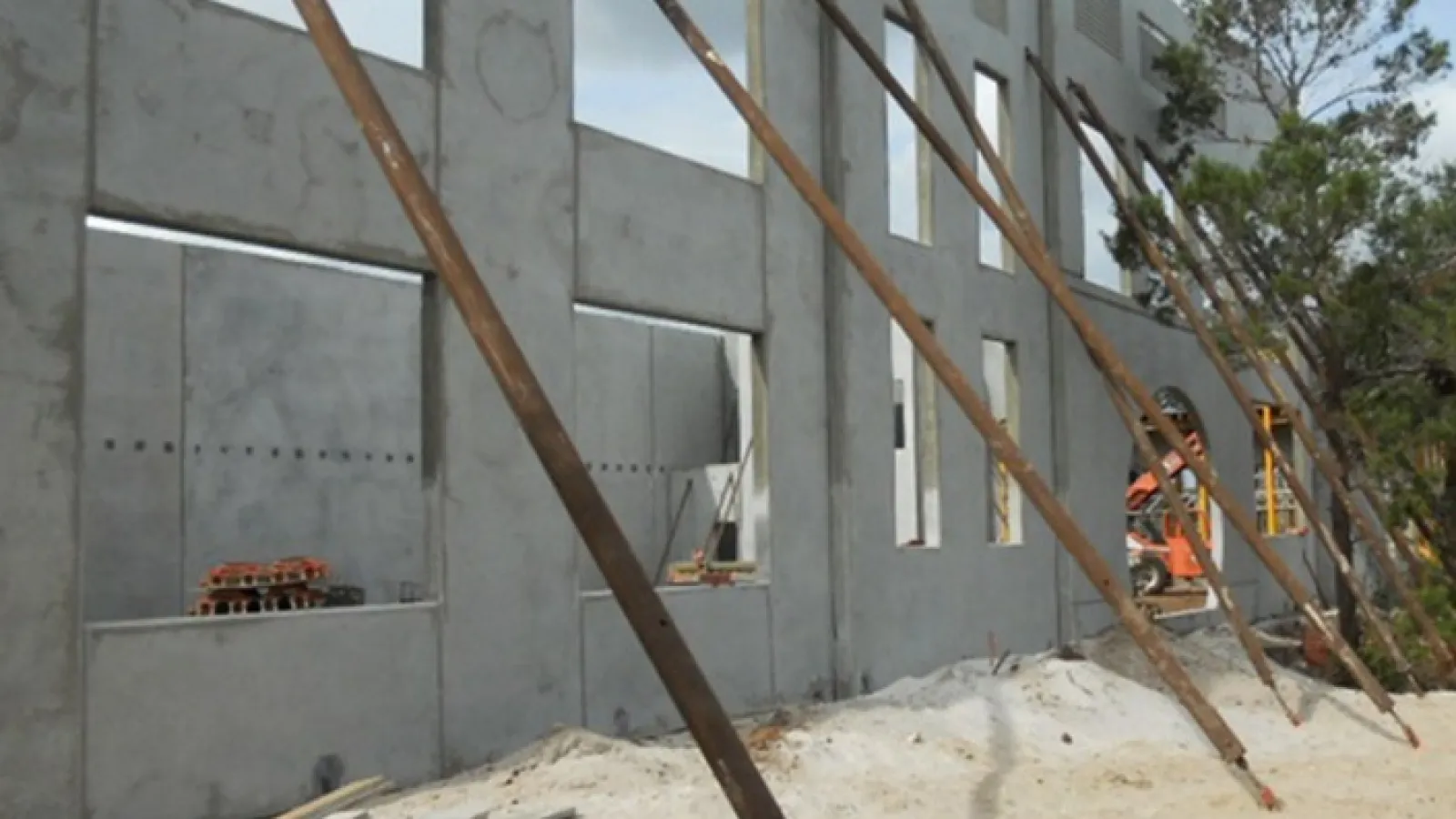
What Our Tilt-Up Construction Scope Covers
General Contractors of Denton delivers tilt-up construction for industrial park developers, owner-users building large service facilities, and commercial owners who need durable envelope systems at competitive cost. Tilt-up in Denton County has local conditions that shape delivery in ways a contractor unfamiliar with this market will not anticipate. Eastern Cross Timbers geology produces sand-clay soil transitions that require geotechnical coordination before the casting slab is designed. City of Denton's permit review process for large commercial and industrial projects has specific timeline characteristics that affect when construction packages can be released. Spring hail exposure and summer heat create weather windows for casting pours that have to be planned in advance.
Beyond the site conditions, tilt-up delivery in a fast-growth market like Denton County often runs against schedule pressure from tenant commitments, developer equity timelines, and lender reporting requirements. The panel casting sequence, crane logistics, and structural steel procurement all have to be organized before field work begins — there is no recovering schedule if the casting slab is not ready when the concrete truck arrives or the crane cannot reach the first panel position because the staging corridor was not planned.
We have delivered tilt-up shells across the Denton County industrial and commercial market. We understand how to coordinate casting logistics on constrained I-35 corridor sites, how to sequence panel erection on multi-building industrial parks where later phases share crane equipment with active construction, and how to protect panel quality during North Texas spring weather windows.
Tilt-up delivery is managed as an integrated structural scope. Foundation coordination, casting slab design, reinforcing placement, embedded hardware, crane logistics, and building envelope close-in are all part of one coordinated path.
- Preconstruction panel layout review coordinated with the structural engineer to confirm crane corridor access, casting zone allocation, and lift insert placement for the specific Denton County site.
- Geotechnical coordination for Eastern Cross Timbers sand-clay geology before casting slab design is finalized.
- Weather-window scheduling for casting pours to avoid North Texas spring hail exposure and manage summer heat curing conditions.
- Embedded hardware pre-pour coordination — lift inserts, bracing brackets, door frames, and MEP sleeves confirmed before concrete placement.
- Crane access planning for I-35 corridor industrial parcels and Loop 288 commercial sites with constrained staging areas.
- Panel erection sequencing connected to structural steel procurement so dry-in follows erection without procurement delays.
- Building envelope coordination through roofing, glazing, and exterior finish once panels are set and the structural frame is complete.
- Phased erection planning for multi-building industrial parks where later-phase casting uses the same crane and staging logistics as early-phase work.
How We Deliver Tilt-Up Construction in Denton County
Tilt-up construction requires sequence discipline from the first preconstruction conversation through panel erection. Errors in casting logistics create rework costs that cannot be recovered without significant schedule impact.
Panel Layout and Site Logistics Review
We review the structural panel layout in preconstruction to confirm crane corridor dimensions, casting zone area, and the relationship between panel weights and the crane's reach and capacity at the required radius. Denton County industrial sites — particularly on I-35 frontage with tight lot depths or in-fill commercial sites near the Loop 288 corridor — sometimes require the panel layout to be adjusted before casting slab design is finalized. We raise those issues early.
Geotechnical Preparation
Eastern Cross Timbers geology in Denton County produces variable subgrade conditions across large building footprints. We coordinate geotechnical investigation, subbase preparation, and moisture conditioning recommendations before the casting slab design is locked. The casting slab has to perform under panel dead loads and crane operations during erection — that is a higher load than the finished building floor will typically carry, so geotechnical adequacy for erection conditions has to be specifically confirmed.
Hardware Coordination and Pour Preparation
Every embedded item — lift inserts, bracing hardware, door frame anchors, electrical sleeve placements, and mechanical penetrations — is confirmed against the structural drawings before the pour begins. We hold a pre-pour coordination review that involves the structural engineer, the tilt-up subcontractor, and the relevant trade contractors to eliminate last-minute field discoveries. A misplaced insert or missed blockout requires panel demolition and re-pour, which is a fully preventable cost.
Erection Sequencing and Temporary Bracing
Panel erection is sequenced to use the crane efficiently, manage the sequence of brace removal, and coordinate with the structural steel installation that will anchor panels in their permanent position. Temporary bracing remains in place until the structural engineer confirms the frame configuration can carry loads independently. In North Texas's wind environment — particularly during spring storm season — bracing adequacy is not a condition to estimate.
Building Close-In and Envelope Completion
After panel erection and structural frame completion, we coordinate roofing, glazing, exterior cladding, and mechanical penetration work. For Denton County projects, roofing and glazing scheduling reflects the North Texas spring hail window and summer temperature extremes that affect installation quality and manufacturer warranty conditions.
Tilt-Up Construction Project Types in Denton County
Tilt-up construction serves a wide range of commercial and industrial programs across Denton County — from large-footprint distribution to multi-tenant flex industrial to large-format retail.
Industrial Parks and Speculative Shell Development
Speculative industrial parks in Denton County frequently use tilt-up for its combination of shell delivery speed and durable finish. Multi-building industrial parks along the I-35 corridor and US-380 growth corridor benefit from phased casting logistics that keep crane and concrete costs efficient across multiple buildings without duplicating mobilization.
Manufacturing and Heavy-Service Owner-User Facilities
Manufacturing and service facilities in Denton's industrial base — from Peterbilt-adjacent suppliers to oilfield-service support operations — regularly use tilt-up for the structural depth and wall durability that heavy-use industrial programs require. Owner-user tilt-up projects require utility penetration placement and structural loading coordination specific to the production or service operation.
Large-Format Commercial and Service Centers
Large-format retail anchors, car-wash campuses, and service commercial buildings in Denton County use tilt-up for facade design flexibility and the ability to express architectural reveals and openings without compromising structural integrity. Panel finish coordination on retail tilt-up is more detailed than standard industrial — we include that coordination in preconstruction rather than treating it as a field afterthought.
Data Storage and Temperature-Controlled Facilities
The Denton market's technology employment base connected to UNT's computer science and engineering programs supports ongoing demand for data-adjacent and temperature-controlled storage facilities. Tilt-up provides the continuous envelope performance and wall mass that temperature-sensitive programs need.
Why Owners Choose General Contractors of Denton for Tilt-Up Construction
Tilt-up construction in Denton County has specific local conditions — Eastern Cross Timbers geology, North Texas weather windows, and the access constraints on I-35 and Loop 288 corridor industrial sites — that a contractor unfamiliar with this market will not have accounted for in their delivery plan. We build those conditions into the project schedule from the first preconstruction conversation.
Our team manages the relationship between the structural engineer, the tilt-up subcontractor, the civil designer, and the owner as one coordinated delivery path. That coordination is what prevents the casting-logistics and embedded-hardware failures that derail tilt-up projects when each party is operating from their own schedule without a general contractor connecting them.
For developers building speculative industrial product in Denton County's fast-growth market, tilt-up delivery speed is only an advantage when preconstruction discipline keeps the casting sequence on track. We protect that speed with early hardware coordination, geotechnical preparation, and weather-window planning.
Tilt-up construction work is available throughout Denton, Sanger, Krum, Argyle, Northlake, Corinth, Lake Dallas, Lewisville, Carrollton, The Colony, Little Elm, and the I-35 and US-380 industrial corridors across Denton County.
Nearby Denton markets for this service
Denton
Denton is the county seat and economic center of Denton County — home to the University of North Texas (46,000+ students), Texas Woman's University, Peterbilt Motors, Sally Beauty Holdings, and a manufacturing base that has anchored the north DFW economy for generations. Commercial and industrial construction here serves a market shaped by university growth, established corporate campus programs, and the ongoing US-380 corridor explosion that is pulling new development east and west of the city.
View marketCorinth
Corinth sits at the southern end of Denton County along I-35E, positioned between Denton and the Lewisville Lake recreation zone with direct highway access to the Dallas–Fort Worth core. The city has attracted retail, office, and service commercial development serving the south Denton County residential base, and its I-35E frontage creates industrial and logistics potential that the surrounding residential growth is beginning to activate.
View marketLake Dallas
Lake Dallas is a small city on I-35E at the Lewisville Lake shoreline, serving as a commercial service node for the lake-adjacent residential communities of south Denton County. Commercial construction here is primarily service commercial, retail, and light industrial — serving the lakefront population and the I-35E traffic corridor between Denton and Lewisville.
View marketHickory Creek
Hickory Creek is a small south Denton County city on I-35E between Lake Dallas and Highland Village, positioned at the Lewisville Lake-adjacent zone where highway-facing commercial development serves the south Denton County residential market and the lake-adjacent recreation economy. Commercial construction opportunities focus on I-35E corridor retail, service commercial, and light industrial.
View marketArgyle
Argyle is southwestern Denton County's premier address — an Argyle ISD community anchored by the Robson Ranch 55+ master-planned community and the equestrian estate properties along the I-35W corridor. Commercial construction here serves a high-income residential base, equestrian facilities, and the growing US-377 commercial zone serving south Denton County's most affluent market segment.
View marketFrequently asked questions
What is the difference between tilt-up and tilt-wall construction?
Tilt-up and tilt-wall are terms used interchangeably in the industry to describe the same structural system — concrete panels cast horizontally on a slab and then tilted into vertical position using a crane. Some contractors or regions use one term over the other, but the construction method is the same.
How does the spring hail season in Denton County affect tilt-up casting schedules?
Fresh concrete panels are vulnerable to surface damage from hail before they reach adequate strength and before surface finishing is complete. We schedule casting pours with weather monitoring and maintain contingency plans for temporary panel protection so hail events do not require panel rejection and re-pour. Spring hail in North Texas is a real scheduling variable — we plan around it rather than ignoring it.
What permits are required for tilt-up construction in City of Denton?
Tilt-up construction in the City of Denton requires a building permit through City of Denton Building Inspections, and for larger projects may require site plan commission review. We coordinate the permit timeline in preconstruction to ensure the design submission schedule matches the construction start date. Large commercial and industrial projects in City of Denton can have permit review timelines that require advance planning.