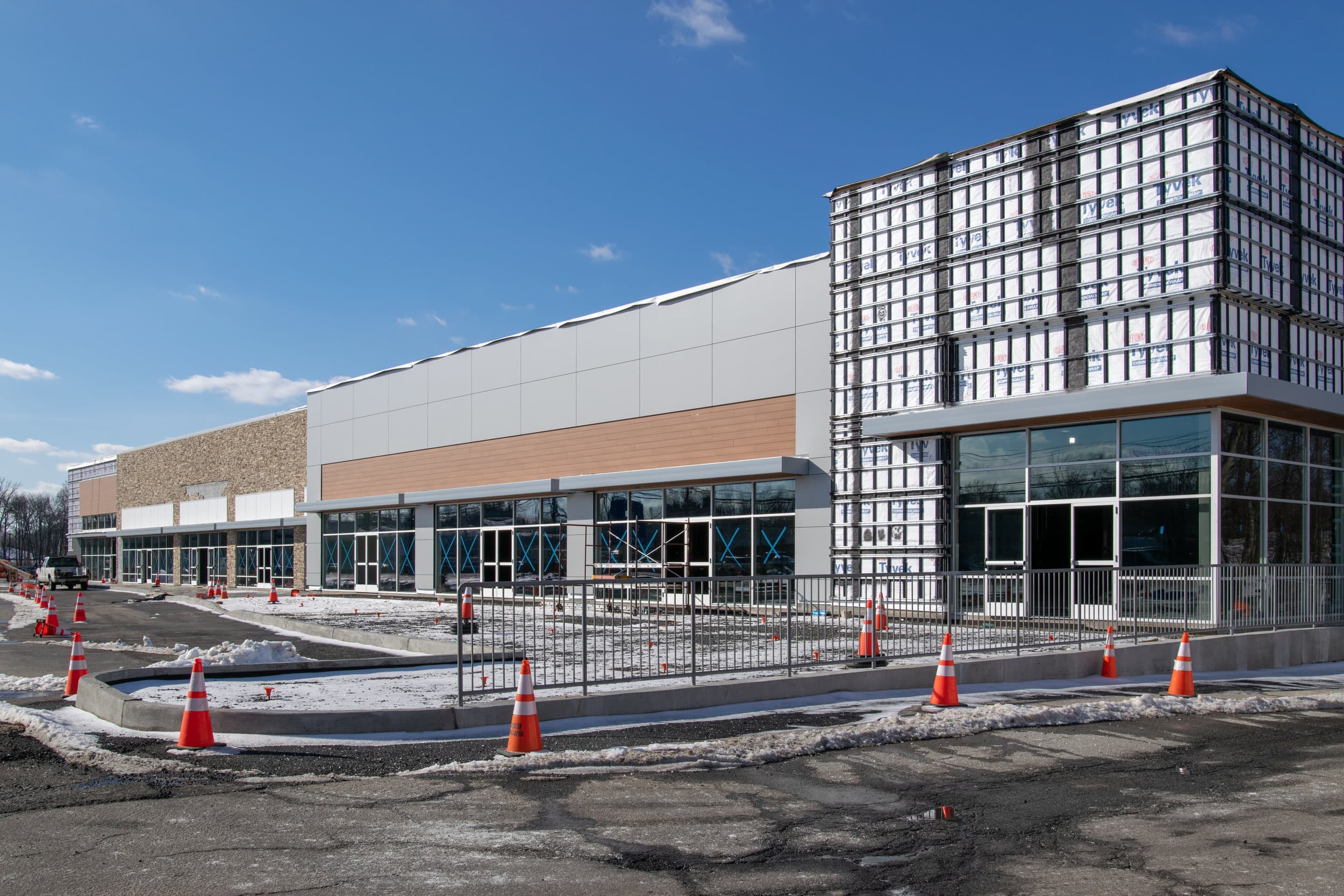
What Our Retail Center Construction Scope Covers
General Contractors of Denton delivers retail center construction for developers, owner-users, and anchor tenants building across Denton County's active retail corridors. The Denton retail market has distinct submarkets that require different construction approaches. The Loop 288 corridor and Rayzor Ranch lifestyle center area represent Denton's highest-volume retail strip — national tenants, restaurant pad sites, drive-through commercial, and inline retail centers that serve the city's general population. The Denton Square and downtown industrial district area serves a different consumer — university-adjacent dining, boutique retail, music-venue adjacent food and beverage, and the DIME Denton and Rubber Gloves venue-adjacent commercial ecosystem. University Drive and Fry Street serve the student population with fast-casual restaurants, convenience retail, and service commercial.
The US-380 corridor from Denton toward Cross Roads, Aubrey, and the Prosper border is the fastest-growing retail territory in the entire market — residential growth in that corridor is generating retail demand faster than existing supply can absorb it. Community retail centers, grocery-anchored strips, and restaurant pads are being developed at a pace that mirrors what Frisco and Allen experienced 15 years ago.
Retail center construction in each of these submarkets has different site conditions, permit review processes, and tenant coordination requirements. A Loop 288 anchor pad site has different access permit requirements than a downtown Denton adaptive reuse. A US-380 corridor strip center has different utility extension timelines than an established Loop 288 commercial corridor site. We build the delivery approach around where the project actually is.
Retail center construction is delivered as a coordinated scope that connects site development, anchor and inline shell delivery, tenant improvement coordination, and phased occupancy into one managed project path.
- Site plan review for parking ratios, access geometry, and shared drive agreements specific to Loop 288, Rayzor Ranch, and US-380 corridor retail locations.
- Anchor and inline tenant shell coordination with base-building electrical, mechanical, and plumbing rough-ins designed for retail tenant improvement.
- Drive-through lane and stack distance planning for food-and-beverage and service commercial tenants.
- Exterior facade coordination for retail center architectural standards and anchor tenant brand requirements.
- Tenant improvement coordination for phased occupancy across inline bays as lease-ups progress.
- City of Denton permit coordination for large retail developments requiring site plan commission review.
- Utility extension coordination for US-380 corridor retail sites in smaller jurisdictions with extending water and sewer infrastructure.
- Signage coordination for pylon signs, monument signs, and individual tenant panel systems.
How We Deliver Retail Center Construction in Denton County
Retail center construction requires site logistics, anchor tenant coordination, and inline tenant readiness to be planned before field work begins — the phased occupancy sequence that retail developers depend on does not work if base-building infrastructure was not designed for it.
Site Logistics and Access Planning
We begin with a review of the site, access conditions, and anchor tenant requirements before the civil design is finalized. For Loop 288 and Rayzor Ranch corridor sites, that means confirming City of Denton access permit conditions and shared drive geometry. For US-380 corridor sites, it means confirming utility service availability from the applicable jurisdiction — some US-380 growth areas are still extending water and sewer infrastructure to serve new commercial development.
Anchor and Pad Site Coordination
Anchor tenant requirements — specific structural loading, drive-through lane geometry, utility demand specifications, and facade standards — have to be confirmed before the base building design is locked. Pad sites for restaurants and drive-through tenants have specific setback, stacking, and utility requirements that affect the overall site plan layout. We confirm those requirements in preconstruction so the site plan reflects what the anchor and pad tenants actually need.
Shell and Inline Bay Delivery
Retail center shell delivery connects site and civil completion to the structural shell, building enclosure, and base-building mechanical and electrical rough-ins for each inline bay. Phased delivery — delivering anchor space first while inline bays follow — requires utility zoning and temporary certificate-of-occupancy management that has to be planned before construction begins.
Tenant Improvement Coordination
As inline bays are leased, tenant improvement construction begins while the balance of the center is still under base-building construction. We establish work zone boundaries and access controls so tenant improvement contractors and base-building crews can operate simultaneously without safety conflicts or schedule interference.
Grand Opening and Phased Occupancy
Retail developers work toward anchor and key-tenant grand opening dates that are often tied to marketing commitments and sales launch timelines. We build the construction schedule around those dates as hard milestones and manage punch, final inspections, and certificate-of-occupancy timing to protect them.
Retail Center Project Types in Denton County
Denton County retail center construction spans neighborhood strip centers to power center anchors, each with different site conditions and tenant profiles.
Loop 288 and Rayzor Ranch Power and Lifestyle Centers
The Loop 288 commercial belt and Rayzor Ranch lifestyle center represent Denton's most established retail strips. New development and repositioning in this corridor serves national tenants, local restaurant operators, and service commercial users who need visibility and access from the city's primary retail arterial.
US-380 Corridor Community Retail
Community retail center development along US-380 between Denton and Cross Roads is absorbing residential-driven demand at a pace that mirrors early-stage suburban growth markets. Grocery-anchored strips, neighborhood service centers, and restaurant pad sites in this corridor need utility extension planning and smaller-jurisdiction permit coordination that differs from established Denton retail sites.
University-Adjacent Student and Mixed-Use Retail
Retail serving the UNT and TWU student population along University Drive, Fry Street, and the Denton Square area operates in a different market than suburban retail. Fast-casual restaurants, convenience concepts, and university-facing service retail in this submarket often involve adaptive reuse of existing buildings or small-lot new construction that requires downtown-specific permit and access planning.
Denton Square and Downtown Corridor Adaptive Reuse
The historic Denton Square and the adjacent Industrial District revival area create retail renovation and adaptive reuse opportunities that require familiarity with historic facade preservation requirements, downtown-specific permit processes, and the music-scene cultural identity that makes the Denton downtown retail market distinctive.
Why Retail Developers Choose General Contractors of Denton
Retail center construction succeeds when anchor tenant coordination, site access planning, and phased occupancy management are built into the project plan from the start. Retail developers who have worked with general contractors who treat retail delivery as a standard commercial shell project regularly encounter problems at tenant improvement transitions, phased occupancy milestones, and grand opening deadlines.
We understand the Denton County retail market — the Loop 288 corridor's established commercial infrastructure, the US-380 corridor's rapid growth and extending utility systems, and the downtown Denton district's unique tenant profile and permit environment. We do not apply the same delivery template across those different conditions.
For out-of-market developers building retail product in Denton County's growth corridors, we provide local permit knowledge, subcontractor relationships, and market context that accelerates delivery without requiring the developer to manage the Denton-specific details from a remote office.
Retail center construction work is available throughout Denton, Argyle, Corinth, Lake Dallas, Lewisville, The Colony, Little Elm, Cross Roads, Aubrey, Flower Mound, and the US-380 and Loop 288 retail corridors across Denton County.
Nearby Denton markets for this service
Denton
Denton is the county seat and economic center of Denton County — home to the University of North Texas (46,000+ students), Texas Woman's University, Peterbilt Motors, Sally Beauty Holdings, and a manufacturing base that has anchored the north DFW economy for generations. Commercial and industrial construction here serves a market shaped by university growth, established corporate campus programs, and the ongoing US-380 corridor explosion that is pulling new development east and west of the city.
View marketCorinth
Corinth sits at the southern end of Denton County along I-35E, positioned between Denton and the Lewisville Lake recreation zone with direct highway access to the Dallas–Fort Worth core. The city has attracted retail, office, and service commercial development serving the south Denton County residential base, and its I-35E frontage creates industrial and logistics potential that the surrounding residential growth is beginning to activate.
View marketLake Dallas
Lake Dallas is a small city on I-35E at the Lewisville Lake shoreline, serving as a commercial service node for the lake-adjacent residential communities of south Denton County. Commercial construction here is primarily service commercial, retail, and light industrial — serving the lakefront population and the I-35E traffic corridor between Denton and Lewisville.
View marketHickory Creek
Hickory Creek is a small south Denton County city on I-35E between Lake Dallas and Highland Village, positioned at the Lewisville Lake-adjacent zone where highway-facing commercial development serves the south Denton County residential market and the lake-adjacent recreation economy. Commercial construction opportunities focus on I-35E corridor retail, service commercial, and light industrial.
View marketArgyle
Argyle is southwestern Denton County's premier address — an Argyle ISD community anchored by the Robson Ranch 55+ master-planned community and the equestrian estate properties along the I-35W corridor. Commercial construction here serves a high-income residential base, equestrian facilities, and the growing US-377 commercial zone serving south Denton County's most affluent market segment.
View marketFrequently asked questions
What parking ratio is required for retail centers in City of Denton?
City of Denton's development code specifies minimum parking ratios for retail uses that vary by tenant type and zoning district. Standard retail typically requires 4 to 5 spaces per 1,000 square feet. Restaurant and food-service uses require higher ratios. We review parking requirements during site plan preparation so the project meets code without over-building parking that reduces leasable square footage.
How does the Denton Square historic overlay affect retail construction downtown?
Properties within the Denton Square historic overlay are subject to facade design standards and preservation requirements administered through City of Denton's historic preservation process. New construction adjacent to the Square and renovation of contributing historic structures both require coordination with the city's historic preservation staff. We include that review process in the permit timeline for downtown retail projects.
Can General Contractors of Denton deliver retail center projects on the US-380 corridor where utility infrastructure is still extending?
Yes. We coordinate utility extension planning with the applicable water and sewer providers — which may be the City of Denton, a MUD, or a smaller city's utility department depending on the site location — during preconstruction. Utility extension timelines are factored into the construction schedule so the project is not delayed waiting for utility connections that were not confirmed to be available at the construction start date.