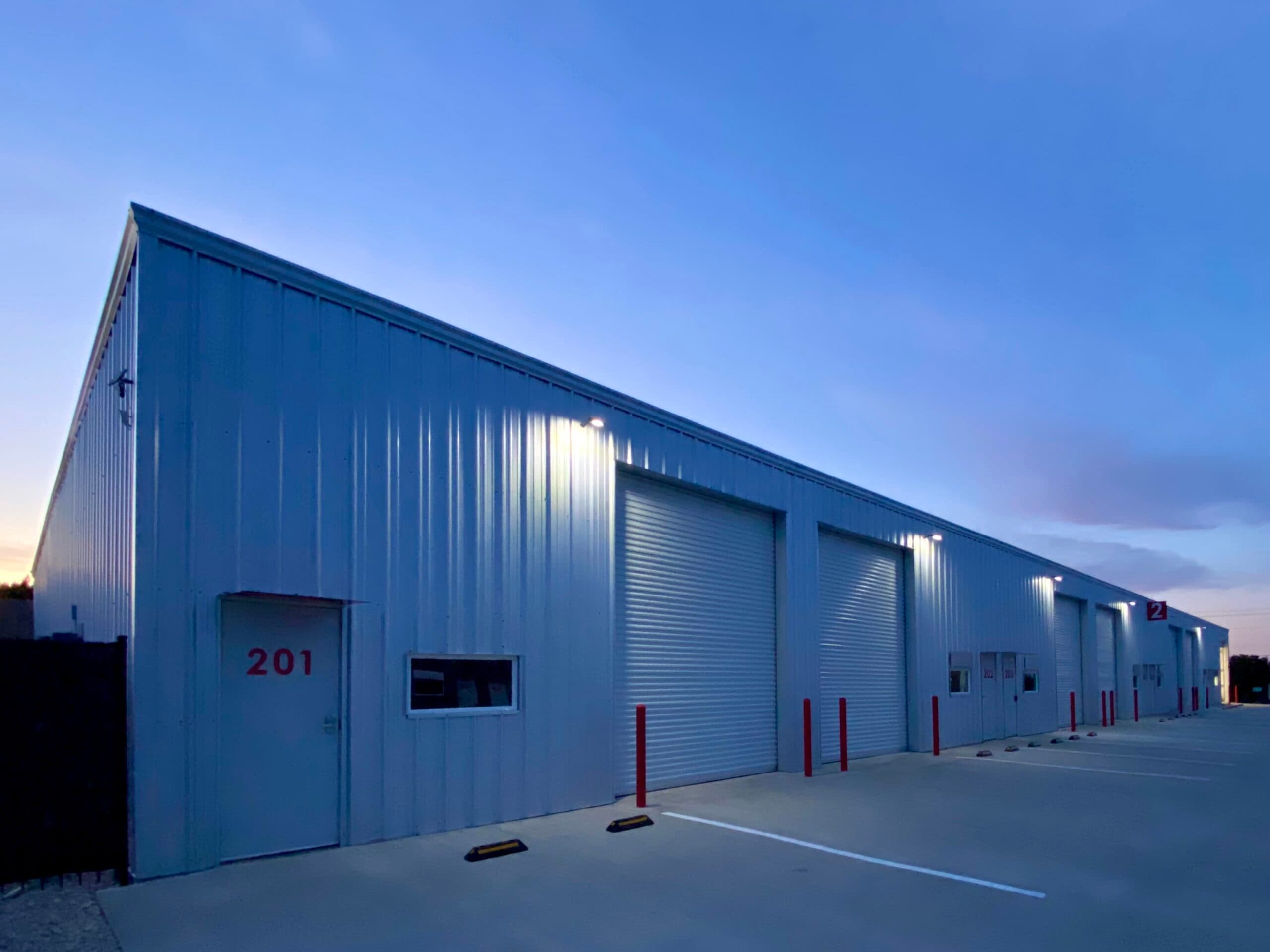
What Our Speculative Industrial Construction Scope Covers
General Contractors of Denton delivers speculative industrial building construction for institutional developers, private equity-backed real estate groups, and owner-builder industrial investors developing speculative shell product across Denton County. Speculative industrial construction is different from owner-user or build-to-suit delivery in one critical way: the building has to be designed for the widest possible tenant range without the specific tenant's program to guide design decisions. Getting the speculative shell specification right — clear height, dock configuration, slab flatness, electrical service stub-out locations, and ESFR classification — determines whether the building leases quickly to well-qualified tenants or sits vacant waiting for a tenant who is willing to accept a building that was built for someone else.
Denton County's speculative industrial market is active for well-founded reasons. The I-35 split position, the Peterbilt manufacturing anchor, the oilfield-service employer base, and the US-380 corridor's explosive residential growth all support industrial tenant demand across multiple size ranges. Developers who understand those demand drivers can build speculative product with reasonable confidence that tenants will follow.
We deliver speculative industrial shells with the construction quality and base-building specifications that attract the strongest tenants. That means engaging the leasing market context in preconstruction — what are tenants in the specific Denton County submarket asking for, what clear heights are competitive, what electrical service stub-out positions support the widest range of users — and building the shell to that specification rather than to the minimum cost.
Speculative industrial construction is delivered as a coordinated scope from shell specification through lender-ready reporting and tenant-improvement-ready turnover.
- Shell specification review against the Denton County leasing market — clear height, dock count, electrical service stub-out positioning, and slab flatness appropriate for the target tenant profile.
- Structural system selection — tilt-wall for larger footprints, PEMB for smaller flex product — against the program and the delivery schedule.
- ESFR fire suppression system coordination for high-bay speculative product.
- Electrical service stub-out infrastructure for individual tenant metering and sub-panel flexibility.
- Dock system installation with tenant-improvement-ready leveler knock-out provisions for future dock-door additions.
- Heavy-duty concrete truck-court and dock-apron pavement coordinated for Eastern Cross Timbers subgrade conditions.
- Lender-ready progress reporting — draw request documentation, inspection coordination, and completion certification for construction loan administration.
- Tenant-improvement-ready documentation package — base-building specifications, electrical capacity, fire suppression classification, and shell dimensions — for leasing support.
How We Deliver Speculative Industrial Construction in Denton County
Speculative industrial delivery requires shell specification decisions — clear height, dock count, electrical service — to be made against the leasing market before structural design begins. Getting those decisions wrong costs more in vacancy than in construction.
Market Context and Shell Specification Review
We engage the developer's leasing team or broker during preconstruction to review what tenants in the specific Denton County submarket are requesting — clear heights that are competitive in the I-35 corridor versus the US-380 flex market, dock-door counts per square foot that match the size range being built, and electrical service positions that support the widest range of industrial users. Shell specification decisions made without this market context regularly produce buildings that are technically acceptable but are harder to lease than the competitive product.
Structural System and ESFR Coordination
Speculative industrial structural system selection — tilt-wall or PEMB — is driven by the building size, the target clear height, and the delivery schedule. ESFR fire suppression system design for high-bay speculative product requires early integration with the structural engineer so roof loading, sprinkler main routing, and pump room placement are addressed in the structural design rather than retrofitted.
Base-Building Infrastructure for Tenant Flexibility
Speculative shells need base-building infrastructure that serves the widest possible tenant range without committing to a specific tenant's program. That means electrical stub-out positions that can serve multiple sub-panel locations, dock-door knock-out provisions in the tilt-wall panels for future door additions, plumbing rough-in provisions for restroom buildout in multiple possible locations, and HVAC distribution provisions that allow future office sections to be added without structural modification.
Lender Reporting and Draw Administration
Speculative industrial projects are typically financed with construction loans that require periodic draw requests, inspection coordination, and completion certifications. We organize draw request documentation — cost-to-date reporting, percentage-of-completion certification, and lien waiver packages — on a schedule that matches the lender's draw review cycle.
Shell Turnover and Leasing Documentation
Speculative shell turnover includes a documentation package that supports the developer's leasing program — base-building specifications, electrical service capacity, fire suppression classification, dock configuration, slab flatness test results, and structural loading information that prospective tenants' engineers and contractors need to evaluate the space for their specific program.
Speculative Industrial Building Types in Denton County
Speculative industrial product in Denton County ranges from large-bay distribution shells along I-35 to small-bay flex product on the US-380 corridor.
Large-Bay Distribution Shells Along I-35
Large-bay distribution shells along the I-35 corridor — typically 150,000 to 500,000 square feet with 32-to-36-foot clear heights and heavy dock counts — target regional distribution and e-commerce fulfillment tenants. Tilt-wall is the standard structural system for this product type.
Mid-Bay Multi-Tenant Industrial Parks
Mid-bay multi-tenant industrial parks — typically 25,000 to 100,000 square feet with 24-to-28-foot clear heights — serve manufacturing, light industrial, and regional distribution tenants in the 10,000-to-50,000-square-foot size range. These projects require phased tenant improvement planning and individual metering provisions built into the base building.
Small-Bay Flex Product on US-380
Small-bay flex product on the US-380 corridor — typically 1,500-to-10,000-square-foot bays with 18-to-22-foot clear heights — serves the contractor, service commercial, and light manufacturing tenant base following the residential growth wave. PEMB is typically cost-efficient at this scale.
Bulk Industrial for Oilfield-Service and Manufacturing
Bulk industrial shells targeting Denton County's oilfield-service and manufacturing tenant base may require heavy electrical service stub-outs, outdoor yard integration, and structural provisions for heavy equipment — specifications that differ from standard distribution shell design but command premium rents from qualified tenants.
Why Industrial Developers Choose General Contractors of Denton for Speculative Construction
Speculative industrial success in Denton County is driven by getting the shell specification right for the specific submarket — and delivering it on time with lender-quality reporting that supports construction loan administration. We engage both of those requirements in preconstruction.
Shell specification built around the Denton County leasing market's current tenant demand produces buildings that lease faster and at better rents than buildings built to a generic template. That leasing performance directly affects the developer's return on investment — a building that leases three months faster has significantly better economics than one that sits while the carrying cost accumulates.
For institutional developers and equity-backed groups building speculative industrial in Denton County's growth corridors, we provide the reporting discipline and delivery reliability that construction lenders and equity partners require.
Speculative industrial construction work is available throughout Denton, Sanger, Krum, Northlake, Argyle, Corinth, Lake Dallas, Lewisville, Carrollton, The Colony, and the I-35 and US-380 industrial corridors across Denton County.
Nearby Denton markets for this service
Denton
Denton is the county seat and economic center of Denton County — home to the University of North Texas (46,000+ students), Texas Woman's University, Peterbilt Motors, Sally Beauty Holdings, and a manufacturing base that has anchored the north DFW economy for generations. Commercial and industrial construction here serves a market shaped by university growth, established corporate campus programs, and the ongoing US-380 corridor explosion that is pulling new development east and west of the city.
View marketCorinth
Corinth sits at the southern end of Denton County along I-35E, positioned between Denton and the Lewisville Lake recreation zone with direct highway access to the Dallas–Fort Worth core. The city has attracted retail, office, and service commercial development serving the south Denton County residential base, and its I-35E frontage creates industrial and logistics potential that the surrounding residential growth is beginning to activate.
View marketLake Dallas
Lake Dallas is a small city on I-35E at the Lewisville Lake shoreline, serving as a commercial service node for the lake-adjacent residential communities of south Denton County. Commercial construction here is primarily service commercial, retail, and light industrial — serving the lakefront population and the I-35E traffic corridor between Denton and Lewisville.
View marketHickory Creek
Hickory Creek is a small south Denton County city on I-35E between Lake Dallas and Highland Village, positioned at the Lewisville Lake-adjacent zone where highway-facing commercial development serves the south Denton County residential market and the lake-adjacent recreation economy. Commercial construction opportunities focus on I-35E corridor retail, service commercial, and light industrial.
View marketArgyle
Argyle is southwestern Denton County's premier address — an Argyle ISD community anchored by the Robson Ranch 55+ master-planned community and the equestrian estate properties along the I-35W corridor. Commercial construction here serves a high-income residential base, equestrian facilities, and the growing US-377 commercial zone serving south Denton County's most affluent market segment.
View marketFrequently asked questions
What clear height is most marketable for speculative industrial in Denton County?
Clear height competitiveness in Denton County's speculative industrial market depends on the building size range and submarket. Large-bay distribution buildings along I-35 are most competitive at 32-to-36-foot clear heights. Mid-bay multi-tenant industrial parks are competitive at 24-to-28 feet. Small-bay flex buildings on the US-380 corridor are typically leased at 18-to-22-foot clear heights. We review clear height competitiveness against the current leasing market during preconstruction.
How do construction lenders report on speculative industrial projects in Denton County?
Construction lenders for speculative industrial projects typically require monthly draw requests with project-cost-to-date certifications, inspection reports from the lender's inspector, and lien waiver packages before each draw is released. We organize draw request documentation on a schedule that matches the lender's draw cycle and prepare certifications that accurately represent the project's percentage of completion.