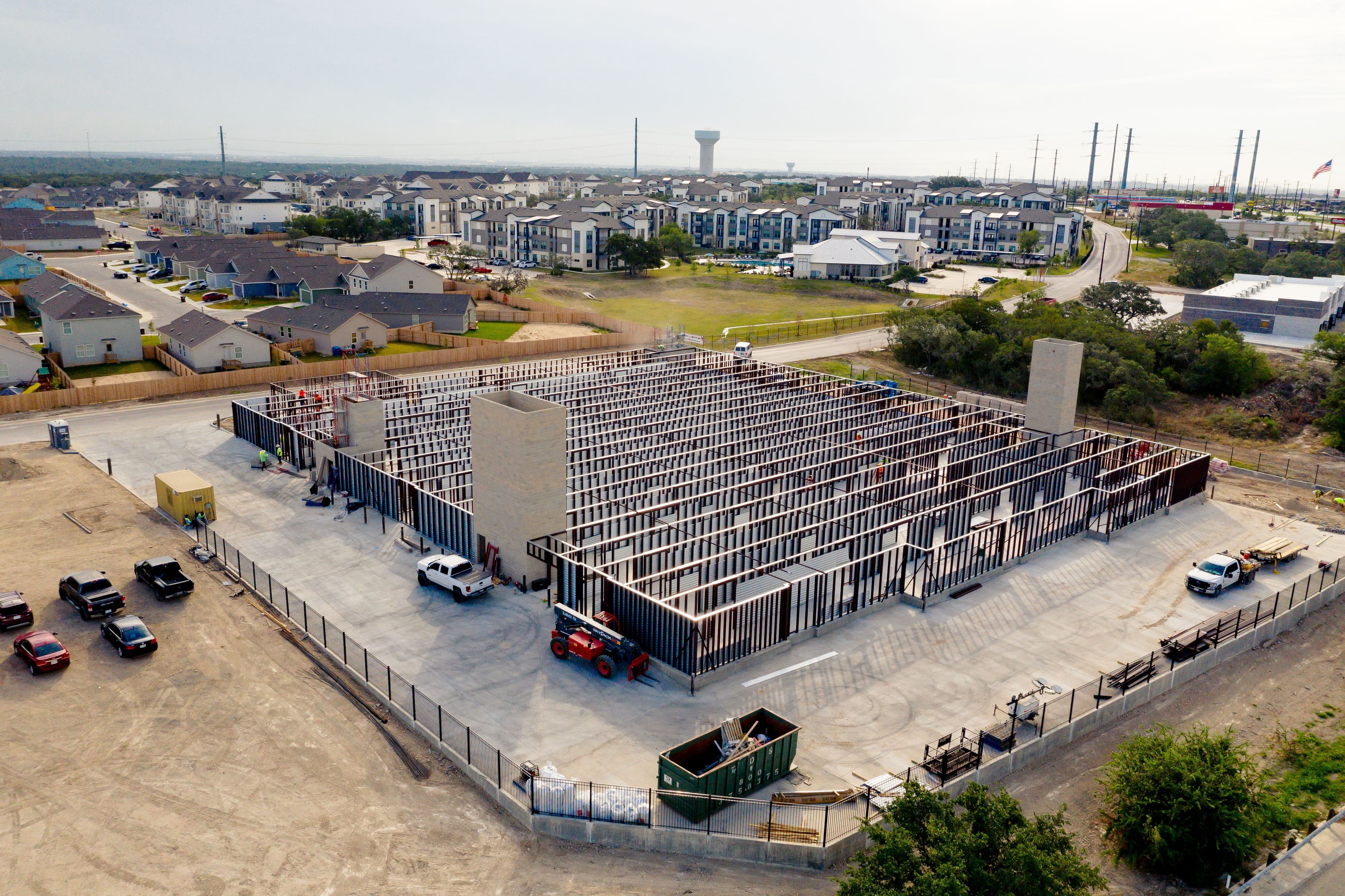
What Our Self-Storage Construction Scope Covers
General Contractors of Denton delivers self-storage construction for private operators, REIT-affiliated developers, and institutional investors building self-storage facilities across Denton County. Self-storage construction in Denton County has a strong demand case that is supported by observable market conditions: the county is one of the fastest-growing in Texas, the US-380 corridor is adding thousands of new households annually, and the two major recreational lakes — Lewisville Lake at the county's southern edge and Ray Roberts Lake north of Sanger — generate year-round boat and RV storage demand that exceeds available supply in most nearby markets.
Self-storage construction has its own set of specific design and permitting requirements. Climate-controlled self-storage requires HVAC system design, vapor barrier coordination, and building envelope performance specifications that differ from standard industrial construction. Boat and RV storage requires tall clearances, wide bay spacing, and paving sections designed for heavy recreational vehicles. Security systems — cameras, access control, gate management, and lighting — are as important to self-storage operations as the building itself.
City of Denton and smaller Denton County municipalities have specific zoning and design requirements for self-storage facilities that vary by jurisdiction. We review zoning compatibility, design standard compliance, and applicable conditional use permit requirements in preconstruction before design investment is committed.
Self-storage construction is delivered as a coordinated scope that connects building system selection, climate control design, security infrastructure, and operational readiness into one managed delivery path.
- Building system selection — insulated metal panel, masonry, or hybrid structural systems appropriate for the climate-controlled or drive-up program.
- HVAC system design for climate-controlled facilities — unit count, distribution, and dehumidification appropriate for North Texas's humidity profile.
- Access control and security system coordination — automated gate systems, camera placement, lighting, and management software integration.
- RV and boat storage bay design — clear height, bay width, turning radius for large recreational vehicles, and surface design for heavy-vehicle loads.
- City of Denton zoning compliance and conditional use permit coordination where required.
- TCEQ stormwater management plan for Denton County sites over one acre of disturbance.
- Signage design coordination for self-storage visibility and branding requirements.
- Management office construction and operational systems readiness.
How We Deliver Self-Storage Construction in Denton County
Self-storage delivery requires zoning confirmation and operational flow design before structural system selection — facilities that are built without confirming zoning compatibility or operational requirements face costly revisions.
Zoning and Site Program Review
We begin with a zoning compatibility review for the specific site and self-storage use type. City of Denton and Denton County municipalities vary in their treatment of self-storage — some jurisdictions require conditional use permits with specific design standards; others permit self-storage by right in industrial zones. We identify the applicable zoning path before design investment is committed and build the design standards into the project from the start.
Building System and Climate Control Selection
Climate-controlled self-storage building systems are selected based on the temperature and humidity profile required for the target tenant mix. North Texas's combination of high summer humidity and winter temperature extremes requires dehumidification systems in climate-controlled facilities that differ from climate-controlled buildings in drier climates. We coordinate the HVAC and dehumidification system selection with the building envelope design before the structural system is finalized.
Security and Access System Design
Self-storage operational security — gate system, camera coverage, access control keypads, lighting, and management software integration — is designed during the building design phase so conduit, electrical, and mechanical rough-ins are included in the original construction scope. Retrofitting security systems into a completed self-storage building is significantly more expensive than designing the rough-in provisions during original construction.
Boat and RV Storage Site Design
Boat and RV storage facilities require turning radius design for vehicles up to 40 to 50 feet in length, bay widths of 14 feet or more, clear heights appropriate for enclosed RV bays, and pavement sections engineered for the combined weight of large recreational vehicles. We coordinate site circulation, pavement design, and covered bay design with the specific RV and boat storage program.
Management Office and Operational Readiness
Self-storage management offices are coordinated with the gate system, camera network, and management software before turnover. Operational readiness includes confirming that the gate access system, payment kiosk, camera network, and lighting controls are functional before the first tenants arrive.
Self-Storage Project Types in Denton County
Self-storage construction in Denton County serves residential demand from the US-380 growth corridor and recreational demand from Lewisville Lake and Ray Roberts Lake.
Climate-Controlled Urban and Suburban Self-Storage
Climate-controlled self-storage serving Denton's residential population near UNT, TWU, and the city's established neighborhoods requires multi-story or single-story climate-controlled building designs with interior unit access, HVAC and dehumidification systems, and security infrastructure appropriate for urban and suburban locations.
US-380 Corridor Drive-Up Self-Storage
Drive-up self-storage on the US-380 corridor serves the growing residential population in Aubrey, Cross Roads, and the Pilot Point area with accessible outdoor unit access. These facilities require site designs that maximize unit count per acre while providing adequate vehicle circulation in narrow drive aisles.
Boat and RV Storage Near Lewisville Lake
Boat and RV storage facilities serving Lewisville Lake's recreational user base — located in Corinth, Lake Dallas, Hickory Creek, and the lake-adjacent communities — require covered and uncovered storage with large-vehicle access, wide turning radii, and boat launch-accessible locations that serve the lake's seasonal and year-round recreation market.
Ray Roberts Lake Recreation Storage
Ray Roberts Lake north of Sanger generates recreational storage demand for the rural and exurban areas of northern Denton County. Self-storage facilities in the Sanger, Pilot Point, and Tioga areas serve this market with a combination of RV, boat, and general outdoor storage products in a less competitive environment than the urban Denton submarket.
Why Self-Storage Operators Choose General Contractors of Denton
Self-storage construction in Denton County has strong demand fundamentals — the residential growth, the recreational lakes, and the student population all support utilization rates that make investment viable. But self-storage facilities that are built without proper zoning review, climate control design, or security system rough-ins face operational problems that reduce occupancy and require expensive remediation.
We coordinate self-storage construction with the same preconstruction discipline we apply to commercial and industrial projects — zoning review before design investment, climate control system design integrated with the building envelope, and security system rough-in included in the original construction scope.
For self-storage investors building in Denton County's fast-growing US-380 corridor and lake-adjacent submarkets, we provide delivery certainty that supports the project's investment timeline from site permitting through operational opening.
Self-storage construction work is available throughout Denton, Sanger, Corinth, Lake Dallas, Lewisville, The Colony, Little Elm, Cross Roads, Aubrey, Pilot Point, and across Denton County.
Nearby Denton markets for this service
Denton
Denton is the county seat and economic center of Denton County — home to the University of North Texas (46,000+ students), Texas Woman's University, Peterbilt Motors, Sally Beauty Holdings, and a manufacturing base that has anchored the north DFW economy for generations. Commercial and industrial construction here serves a market shaped by university growth, established corporate campus programs, and the ongoing US-380 corridor explosion that is pulling new development east and west of the city.
View marketCorinth
Corinth sits at the southern end of Denton County along I-35E, positioned between Denton and the Lewisville Lake recreation zone with direct highway access to the Dallas–Fort Worth core. The city has attracted retail, office, and service commercial development serving the south Denton County residential base, and its I-35E frontage creates industrial and logistics potential that the surrounding residential growth is beginning to activate.
View marketLake Dallas
Lake Dallas is a small city on I-35E at the Lewisville Lake shoreline, serving as a commercial service node for the lake-adjacent residential communities of south Denton County. Commercial construction here is primarily service commercial, retail, and light industrial — serving the lakefront population and the I-35E traffic corridor between Denton and Lewisville.
View marketHickory Creek
Hickory Creek is a small south Denton County city on I-35E between Lake Dallas and Highland Village, positioned at the Lewisville Lake-adjacent zone where highway-facing commercial development serves the south Denton County residential market and the lake-adjacent recreation economy. Commercial construction opportunities focus on I-35E corridor retail, service commercial, and light industrial.
View marketArgyle
Argyle is southwestern Denton County's premier address — an Argyle ISD community anchored by the Robson Ranch 55+ master-planned community and the equestrian estate properties along the I-35W corridor. Commercial construction here serves a high-income residential base, equestrian facilities, and the growing US-377 commercial zone serving south Denton County's most affluent market segment.
View marketFrequently asked questions
What zoning is required for self-storage in City of Denton?
Self-storage is permitted in specific commercial and industrial zoning districts in the City of Denton, and some self-storage programs require a Specific Use Permit even in permitted zones. City of Denton also has design standards for self-storage facilities addressing facade treatment, landscaping, and screening. We review zoning compatibility and design standard requirements for each site during preconstruction.
What clear height is needed for RV storage bays in Denton County?
RV storage bays serving Class A motorhomes and fifth-wheel trailers need a minimum clear height of 14 to 16 feet for standard recreational vehicles, with some operators specifying 16 to 18 feet to accommodate high-profile coaches. Drive-through RV storage bays require open bays at least 14 feet wide and 50 feet deep for full-size fifth-wheel configurations. We review the specific vehicle types the operator intends to store when determining bay dimensions.
Does climate-controlled self-storage in Denton County require dehumidification?
Yes. North Texas's summer humidity creates moisture control demands in climate-controlled self-storage that require dedicated dehumidification beyond standard HVAC cooling. Without adequate dehumidification, climate-controlled units can experience condensation, mold growth, and humidity damage to stored items even with cooling operating. We specify dehumidification capacity as part of the HVAC system design for all climate-controlled self-storage projects in Denton County.