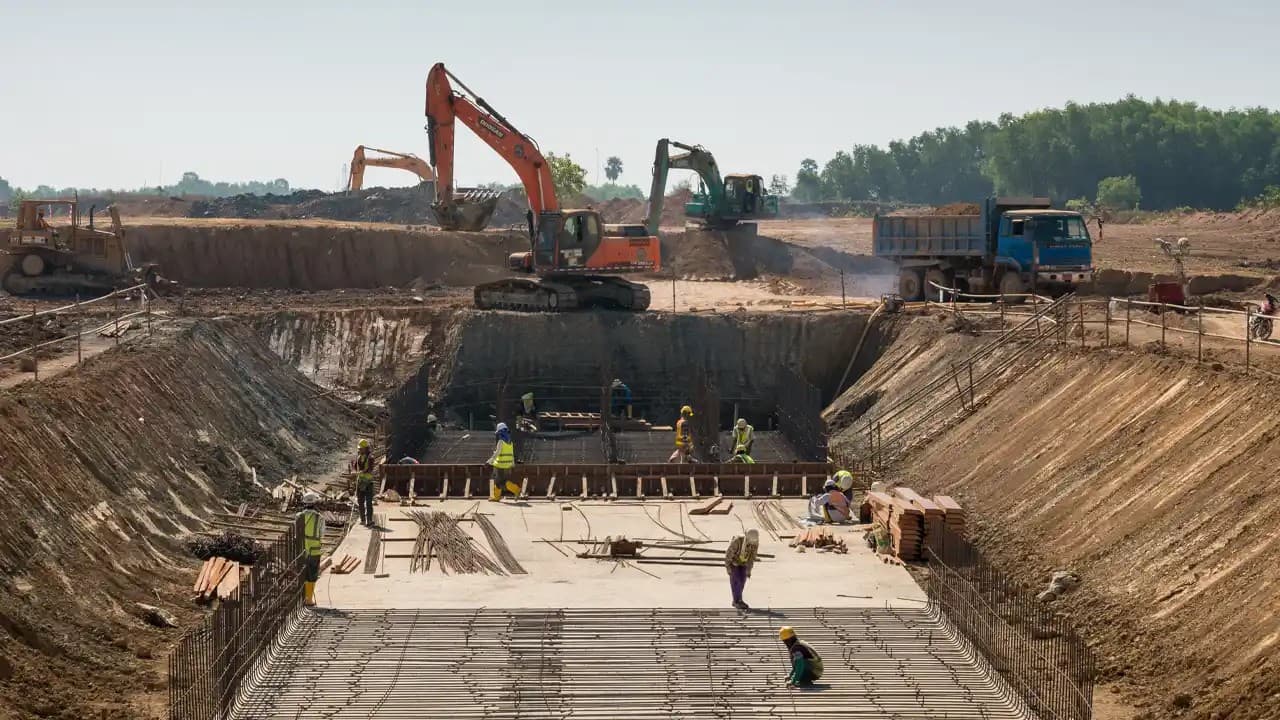
What Our Site Development Scope Covers
General Contractors of Denton delivers site development construction for commercial developers, industrial operators, institutional owners, and municipalities across Denton County. Site development is the foundation that all subsequent construction depends on — pad elevation, utility rough-ins, drainage structures, and pavement bases that are wrong at site development require expensive remediation during building construction or after occupancy.
Denton County's site development landscape has specific local conditions. Eastern Cross Timbers geology creates variable cut and fill conditions across sites. The county's rapid growth means that utility extension timelines for water, sewer, and electric service in the US-380 corridor's growing jurisdictions can affect site development schedules significantly. Stormwater management requirements — both from the City of Denton and from Denton County — have become increasingly detailed as the county's impervious surface grows. TxDOT access permit requirements on I-35 and US-380 corridor sites affect how site access connections are designed and constructed.
We coordinate site development from the civil engineer's design through clearing, grubbing, earthwork, utility rough-ins, drainage structures, and pad preparation as one managed scope. The civil package is not a separate contract that the owner manages independently — it is the foundation of the building program, and it has to be coordinated with the building permit package, the utility provider's service timeline, and the owner's construction start target from the first planning conversation.
Site development is delivered as a coordinated scope from clearing through pad-ready delivery. Earthwork, utility rough-ins, drainage structures, access connections, and temporary stormwater management are managed as one project path.
- Clearing and grubbing coordination with tree survey review and protected tree permit requirements in City of Denton.
- Earthwork and grading to the civil engineer's pad elevation specifications, with mass-balance review to minimize off-site haul costs.
- Utility rough-in coordination with City of Denton Utilities, Denton County MUDs, and smaller jurisdiction providers for water, sewer, and electric service extensions.
- Stormwater management plan implementation — detention ponds, inlets, storm drains, and erosion control in compliance with Denton County and City of Denton requirements.
- TxDOT access permit coordination for I-35 and US-380 corridor sites with frontage access requirements.
- Subgrade preparation and compaction verification for building pad areas before the building foundation is released.
- Site access construction — driveways, sidewalks, fire lane radii, and site perimeter paving that precedes the building's vertical construction.
- Temporary stormwater pollution prevention plan implementation and TCEQ permit compliance.
How We Deliver Site Development in Denton County
Site development follows a defined sequence from clearing through pad-ready turnover. Utility coordination is the most common schedule risk — confirming utility service timelines before site development begins protects the building construction schedule.
Civil Package Review and Utility Coordination
We begin with a review of the civil design package and a direct confirmation of utility service availability and lead times from the applicable providers. For Denton County commercial sites, that means contacting City of Denton Utilities, the applicable MUD, or smaller city utility departments to confirm water, sewer, and electric service capacity and extension lead times. US-380 corridor sites in growing jurisdictions like Cross Roads, Aubrey, and Krugerville may have utility extension timelines that affect the site development schedule significantly.
TCEQ Permit and Stormwater Plan Activation
Sites over one acre of disturbed area require a TCEQ Construction General Permit and an implemented Stormwater Pollution Prevention Plan before earthwork begins. We coordinate permit submission, SWPPP implementation, and erosion control installation as the first construction scope so regulatory compliance does not delay earthwork mobilization.
Clearing, Grubbing, and Earthwork
Clearing and grubbing removes vegetation, root systems, and organic material from the building and pavement footprint areas. Earthwork — cut, fill, and compaction — is managed against the civil engineer's earthwork plan with mass-balance review to minimize off-site haul costs. Eastern Cross Timbers geology can produce rocky conditions at shallow depths in some Denton County locations — we confirm subsurface conditions before committing to earthwork unit prices.
Underground Utility Rough-In
Underground utility installation — water service, sanitary sewer, storm drainage, and electrical conduit — is coordinated with the civil engineer's utility plan, the applicable utility providers, and the building's mechanical and electrical rough-in requirements. Utility rough-ins that are not coordinated with the building permit package often result in field revisions that delay foundation construction.
Pad Preparation and Turnover
Pad preparation is completed to the civil engineer's subgrade elevation specifications, with compaction testing documented and available for the building foundation contractor. We coordinate final pad elevation confirmation with the building permit drawings before declaring the pad ready for foundation construction, so no time is lost resolving elevation discrepancies after the foundation contractor mobilizes.
Site Development Project Types in Denton County
Site development in Denton County serves the full range of commercial and industrial development — from raw land clearing to prepared pad delivery for the county's fastest-growing corridors.
US-380 Corridor Pad Site Preparation
The US-380 growth corridor is developing raw land into commercial pads at a pace that requires site development contractors who understand the utility extension timelines, stormwater requirements, and access permit processes specific to the corridor's multiple small jurisdictions. We have coordinated site development in this corridor and understand the permitting landscape across Cross Roads, Aubrey, Krugerville, and the Denton city limit.
I-35 Industrial Site Development
Industrial site development along I-35 in Denton County requires TxDOT access permit coordination, heavy utility service extension for large electrical loads, and stormwater management design for large impervious surfaces. We coordinate those requirements with the applicable TxDOT district, City of Denton Utilities, and the civil engineer before earthwork begins.
Infill Commercial Site Development
Infill commercial site development near Denton's Loop 288 corridor and downtown area involves existing utility connections, existing paving that may need to be removed, and access conditions on established city streets that require City of Denton public works coordination. Infill site development is often more complex than raw land despite the smaller scale.
Institutional and Educational Site Development
Site development for Denton ISD, Argyle ISD, Sanger ISD, and NCTC facilities involves public agency procurement requirements, Texas Education Agency construction standards, and community visibility that make careful project communication as important as construction execution. We understand the institutional owner's requirements for reporting and documentation.
Why Denton County Developers Choose General Contractors of Denton for Site Development
Site development is where projects gain or lose schedule before vertical construction even begins. Utility extension timelines that were not confirmed before earthwork started, TCEQ permits that were not activated before the excavator mobilized, and access permit conditions that were not understood before the driveway was designed are all site development problems that show up as expensive schedule losses in the building construction phase.
We manage site development with the same preconstruction discipline we apply to building construction — confirming utility service timelines, reviewing stormwater requirements, coordinating access permit conditions, and verifying civil package completeness before earthwork begins.
For developers active in Denton County's fast-moving commercial and industrial market, site development schedule performance is a direct driver of return on investment. A three-month delay in site development delays the building construction, the tenant opening, and the income stream. We manage site development to protect the project schedule from start to pad-ready delivery.
Site development construction work is available throughout Denton, Argyle, Krum, Sanger, Northlake, Justin, Cross Roads, Aubrey, Corinth, Lake Dallas, Lewisville, Carrollton, and the I-35 and US-380 growth corridors across Denton County.
Nearby Denton markets for this service
Denton
Denton is the county seat and economic center of Denton County — home to the University of North Texas (46,000+ students), Texas Woman's University, Peterbilt Motors, Sally Beauty Holdings, and a manufacturing base that has anchored the north DFW economy for generations. Commercial and industrial construction here serves a market shaped by university growth, established corporate campus programs, and the ongoing US-380 corridor explosion that is pulling new development east and west of the city.
View marketCorinth
Corinth sits at the southern end of Denton County along I-35E, positioned between Denton and the Lewisville Lake recreation zone with direct highway access to the Dallas–Fort Worth core. The city has attracted retail, office, and service commercial development serving the south Denton County residential base, and its I-35E frontage creates industrial and logistics potential that the surrounding residential growth is beginning to activate.
View marketLake Dallas
Lake Dallas is a small city on I-35E at the Lewisville Lake shoreline, serving as a commercial service node for the lake-adjacent residential communities of south Denton County. Commercial construction here is primarily service commercial, retail, and light industrial — serving the lakefront population and the I-35E traffic corridor between Denton and Lewisville.
View marketHickory Creek
Hickory Creek is a small south Denton County city on I-35E between Lake Dallas and Highland Village, positioned at the Lewisville Lake-adjacent zone where highway-facing commercial development serves the south Denton County residential market and the lake-adjacent recreation economy. Commercial construction opportunities focus on I-35E corridor retail, service commercial, and light industrial.
View marketArgyle
Argyle is southwestern Denton County's premier address — an Argyle ISD community anchored by the Robson Ranch 55+ master-planned community and the equestrian estate properties along the I-35W corridor. Commercial construction here serves a high-income residential base, equestrian facilities, and the growing US-377 commercial zone serving south Denton County's most affluent market segment.
View marketFrequently asked questions
How long does site development typically take for a commercial pad site in Denton County?
Site development duration for a commercial pad site in Denton County depends on site size, earthwork volume, utility extension requirements, and the applicable permit review timelines. Simple infill site development on a prepared site with existing utilities may take 4 to 8 weeks. Raw land development with utility extensions and stormwater management construction may take 3 to 6 months. We map the site development schedule against the building permit timeline in preconstruction so the overall project schedule is accurate.
What stormwater permits are required for commercial site development in City of Denton?
Sites disturbing one acre or more require a TCEQ Construction General Permit with an implemented SWPPP. The City of Denton also requires stormwater management compliance through its development review process — detention or water quality pond design, inlet sizing, and impervious surface calculations are reviewed during site plan approval. We coordinate both the TCEQ permit and the City of Denton stormwater requirements as part of site development preconstruction.
How does tree preservation affect site development in City of Denton?
City of Denton has a tree preservation ordinance that requires survey and permitting for heritage and significant trees before site development begins. Removal of protected trees requires mitigation — either replacement trees or fee-in-lieu payment. We coordinate tree survey review and permit requirements with the City of Denton Urban Forester during preconstruction so site clearing proceeds without violations that trigger stop-work orders.