What Our Logistics Facility Construction Scope Covers
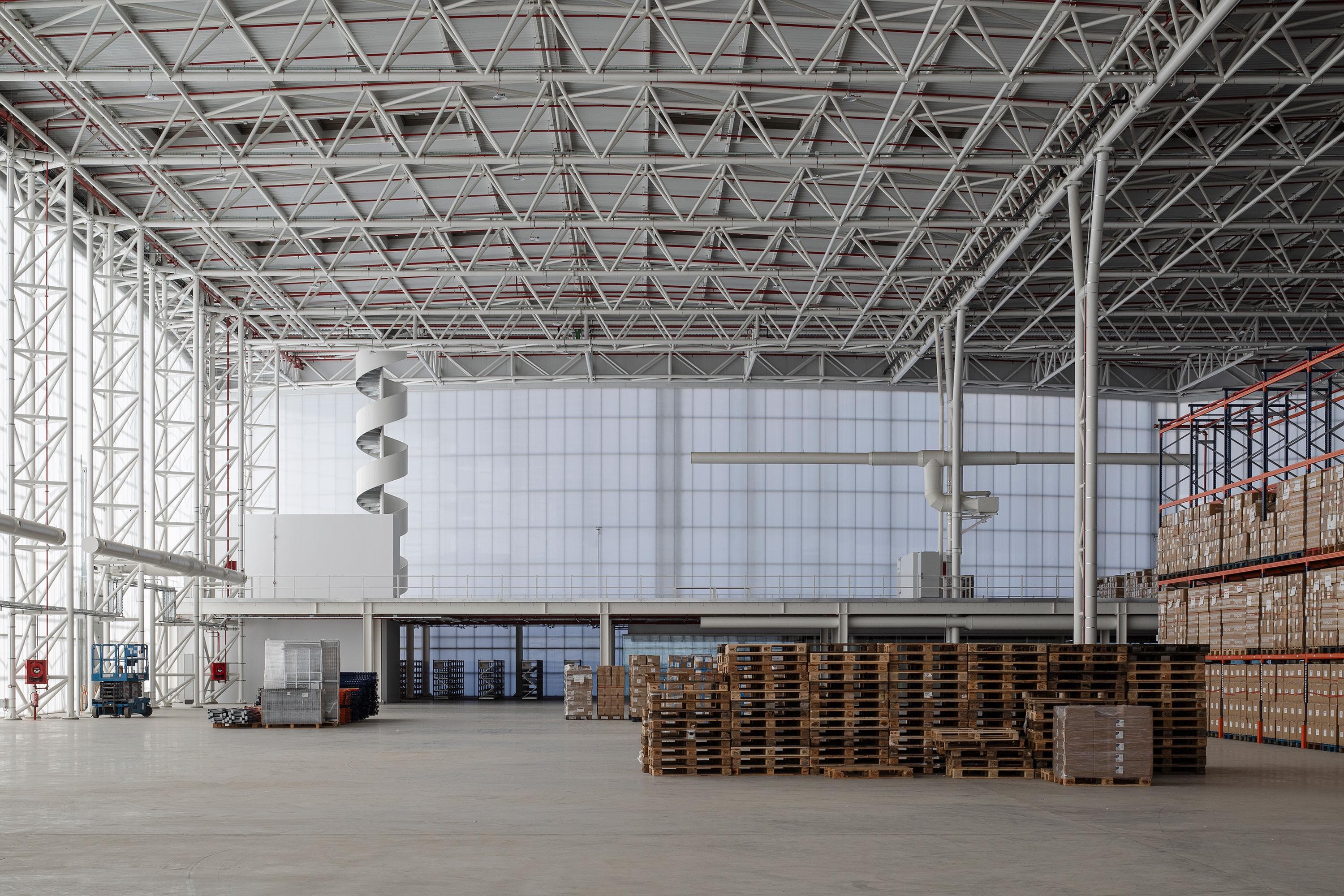
General Contractors of Denton delivers logistics facility construction for parcel carriers, freight forwarders, regional distributors, and logistics real estate developers building in Denton County's active industrial market. Logistics facility construction encompasses a range of facility types — parcel hubs with high dock-door counts and automated sorting infrastructure, regional distribution centers with high-bay storage and ESFR fire suppression, last-mile delivery facilities with mix of dock and grade-level access, and freight support sites with truck parking, fuel, and driver amenities. Each of those facility types has specific design and construction requirements that differ in ways that matter operationally.
Denton County logistics construction has specific local conditions. I-35 corridor sites require TxDOT access permit coordination that shapes how truck courts and site circulation are configured. The US-380 corridor's rapid growth is generating last-mile demand that smaller-jurisdiction permit timelines in Cross Roads, Aubrey, and Krugerville affect. Eastern Cross Timbers geology shapes pavement section design for heavy truck loads on Denton County logistics sites. Lewisville Lake creates a geographic barrier that concentrates north-south truck traffic on I-35 and US-380 in ways that affect site selection strategy for logistics operators.
We coordinate logistics facility construction from dock system design through ESFR integration, heavy-duty pavement, truck-court geometry, and commissioning. The operational requirements of the facility — daily truck volume, dock-door-to-building-area ratio, automation infrastructure demand, and driver services — are built into the site and building design in preconstruction rather than discovered during construction when changes are expensive.
Logistics facility construction is delivered as a coordinated scope that connects site logistics, dock system design, building structure and ESFR integration, heavy-duty pavement, and operational readiness into one managed delivery path.
- Site logistics and operational flow review — dock count, truck court depth, trailer parking, and driver facility placement confirmed before civil design is locked.
- TxDOT access permit coordination for I-35 corridor logistics sites with frontage access requirements.
- High-bay structural system coordination — tilt-wall or structural steel — with ESFR fire suppression integration from the earliest design phase.
- Dock system coordination — dock levelers, dock doors, dock seals, and vehicle restraints — with lead-time management for door equipment packages.
- Heavy-duty pavement section design for Denton County Eastern Cross Timbers geology and loaded semi-trailer axle loads.
- Automation infrastructure rough-in coordination — conveyors, sorters, and battery charging stations — for parcel and e-commerce logistics programs.
- Driver amenity facility design — shower rooms, break areas, and dispatch space — for terminal and relay logistics programs.
- Commissioning and operational readiness coordination before freight operations begin.
How We Deliver Logistics Facility Construction in Denton County
Logistics facility delivery requires operational flow and site logistics decisions to precede civil design — facility configurations that do not match the logistics operation create daily operational costs that compound over the asset's life.
Operational Program and Site Logistics Review
We begin with a detailed review of the logistics operation — freight volume, dock-door count, truck type mix, trailer storage needs, driver population, and any automation requirements — alongside the site conditions and applicable access permit constraints. For Denton County I-35 corridor sites, TxDOT access permit conditions are reviewed before the site plan is designed so the driveway placement, truck court configuration, and trailer parking layout are all compatible with what TxDOT will approve.
Structural and ESFR System Integration
Logistics facility structural design is driven by the clear height required for high-bay storage and the ESFR fire suppression system required by the storage commodity. ESFR design affects roof structural loading, sprinkler main routing through the structural frame, and pump room placement. We coordinate ESFR design with the structural engineer and the fire suppression contractor before the structural package is released for fabrication — late-stage ESFR integration into a completed structural design requires expensive modifications.
Heavy-Duty Pavement Design
Logistics facility truck courts and dock aprons in Denton County require engineered pavement sections for the Eastern Cross Timbers subgrade conditions and the loaded truck axle loads that logistics operations generate. We coordinate geotechnical investigation before pavement section design is finalized and specify full-depth concrete for high-frequency dock apron areas where asphalt performance is inadequate.
Dock System and Automation Coordination
Dock leveler specifications, dock door configurations, vehicle restraint systems, and automation infrastructure rough-ins are confirmed with the logistics operator's equipment vendor before the building permit is submitted. Dock system and automation decisions that are made after the structural design is complete often require floor slab modifications, structural penetrations, and MEP revisions that add cost and schedule time.
Commissioning and Freight Operations Readiness
Logistics facility turnover is organized around the first freight operation date. We coordinate dock equipment commissioning, fire suppression system testing, security system activation, and automation system integration with the logistics operator's startup team so the facility is ready to begin operations on the confirmed opening date without outstanding punch items that affect daily freight throughput.
Logistics Facility Types in Denton County
Logistics facility construction in Denton County serves parcel hubs, regional distribution, last-mile delivery, and freight support operations at the I-35 split.
Parcel Hub and Sorting Facilities
Parcel sorting facilities at Denton County's I-35 position require high dock-door counts, wide-span clear heights for conveyor systems, heavy power distribution for automated sorting equipment, and truck-court geometry optimized for parcel delivery vehicle mix — including both semi-trailers and straight trucks.
Regional Distribution Centers
Regional distribution centers in Denton County's I-35 corridor serve the DFW market from a logistics position that provides access to both the Dallas and Fort Worth distribution zones. These facilities require high-bay tilt-wall or structural steel shells, ESFR, large dock counts, and automation-ready power distribution.
Last-Mile Delivery Facilities
Last-mile delivery facilities on the US-380 corridor serve the growing residential base in Aubrey, Cross Roads, and Pilot Point with a mix of dock and grade-level access designed for delivery van and parcel truck operations. These facilities are smaller than regional distribution centers and require attention to the municipality's permit timeline and utility service availability in growing jurisdictions.
Freight Support and Relay Operations
Freight support facilities at Denton County's I-35 split — including relay terminals, driver service facilities, and owner-operator services — require truck parking capacity, fuel island design, driver amenities, and modest dock or cross-dock facilities for freight transfer operations.
Why Logistics Operators Choose General Contractors of Denton
Logistics facility construction is operationally demanding — facilities that are not designed around the specific freight operation create daily inefficiencies that accumulate into significant cost over the asset's life. Dock-door counts that do not match peak freight volumes, truck courts that do not accommodate simultaneous backing operations, and ESFR systems that were not integrated with the structural design from the start are all expensive problems to correct after construction.
We design logistics facilities around the specific freight operation from the first preconstruction conversation. Operational requirements — dock count, truck type mix, automation program, driver services — drive site and building design rather than the reverse.
For out-of-market logistics real estate investors building at Denton County's I-35 position, we provide local permit knowledge, TxDOT access coordination experience, and Eastern Cross Timbers pavement engineering knowledge that protects the investment from Denton-specific site conditions that a non-local GC would not anticipate.
Logistics facility construction work is available throughout Denton, Sanger, Krum, Northlake, Argyle, Corinth, Lake Dallas, Lewisville, Carrollton, and the I-35 and US-380 logistics corridors across Denton County.
Nearby Denton markets for this service
Denton
Denton is the county seat and economic center of Denton County — home to the University of North Texas (46,000+ students), Texas Woman's University, Peterbilt Motors, Sally Beauty Holdings, and a manufacturing base that has anchored the north DFW economy for generations. Commercial and industrial construction here serves a market shaped by university growth, established corporate campus programs, and the ongoing US-380 corridor explosion that is pulling new development east and west of the city.
View marketCorinth
Corinth sits at the southern end of Denton County along I-35E, positioned between Denton and the Lewisville Lake recreation zone with direct highway access to the Dallas–Fort Worth core. The city has attracted retail, office, and service commercial development serving the south Denton County residential base, and its I-35E frontage creates industrial and logistics potential that the surrounding residential growth is beginning to activate.
View marketLake Dallas
Lake Dallas is a small city on I-35E at the Lewisville Lake shoreline, serving as a commercial service node for the lake-adjacent residential communities of south Denton County. Commercial construction here is primarily service commercial, retail, and light industrial — serving the lakefront population and the I-35E traffic corridor between Denton and Lewisville.
View marketHickory Creek
Hickory Creek is a small south Denton County city on I-35E between Lake Dallas and Highland Village, positioned at the Lewisville Lake-adjacent zone where highway-facing commercial development serves the south Denton County residential market and the lake-adjacent recreation economy. Commercial construction opportunities focus on I-35E corridor retail, service commercial, and light industrial.
View marketArgyle
Argyle is southwestern Denton County's premier address — an Argyle ISD community anchored by the Robson Ranch 55+ master-planned community and the equestrian estate properties along the I-35W corridor. Commercial construction here serves a high-income residential base, equestrian facilities, and the growing US-377 commercial zone serving south Denton County's most affluent market segment.
View marketFrequently asked questions
What ESFR sprinkler classification is required for logistics facilities in Denton County?
ESFR sprinkler classification is determined by the storage commodity and rack configuration — the fire protection engineer specifies the system based on the specific products being stored, the rack height, and the building clear height. City of Denton Fire Department reviews fire suppression system designs as part of the building permit process. We coordinate the fire protection engineer's ESFR design with the structural engineer and the logistics operator's storage program from the earliest design phase.
What is the typical dock-door-to-square-foot ratio for logistics facilities in Denton County?
Dock-door ratios for logistics facilities vary significantly by facility type — parcel hubs may use one door per 1,500 to 2,000 square feet, while bulk distribution centers may use one door per 5,000 to 10,000 square feet. The ratio is determined by throughput requirements, trailer dwell time, and the logistics operation's shift structure. We review dock-door count requirements against the specific logistics program during preconstruction rather than applying a generic ratio.