McKinney Construction Market Overview
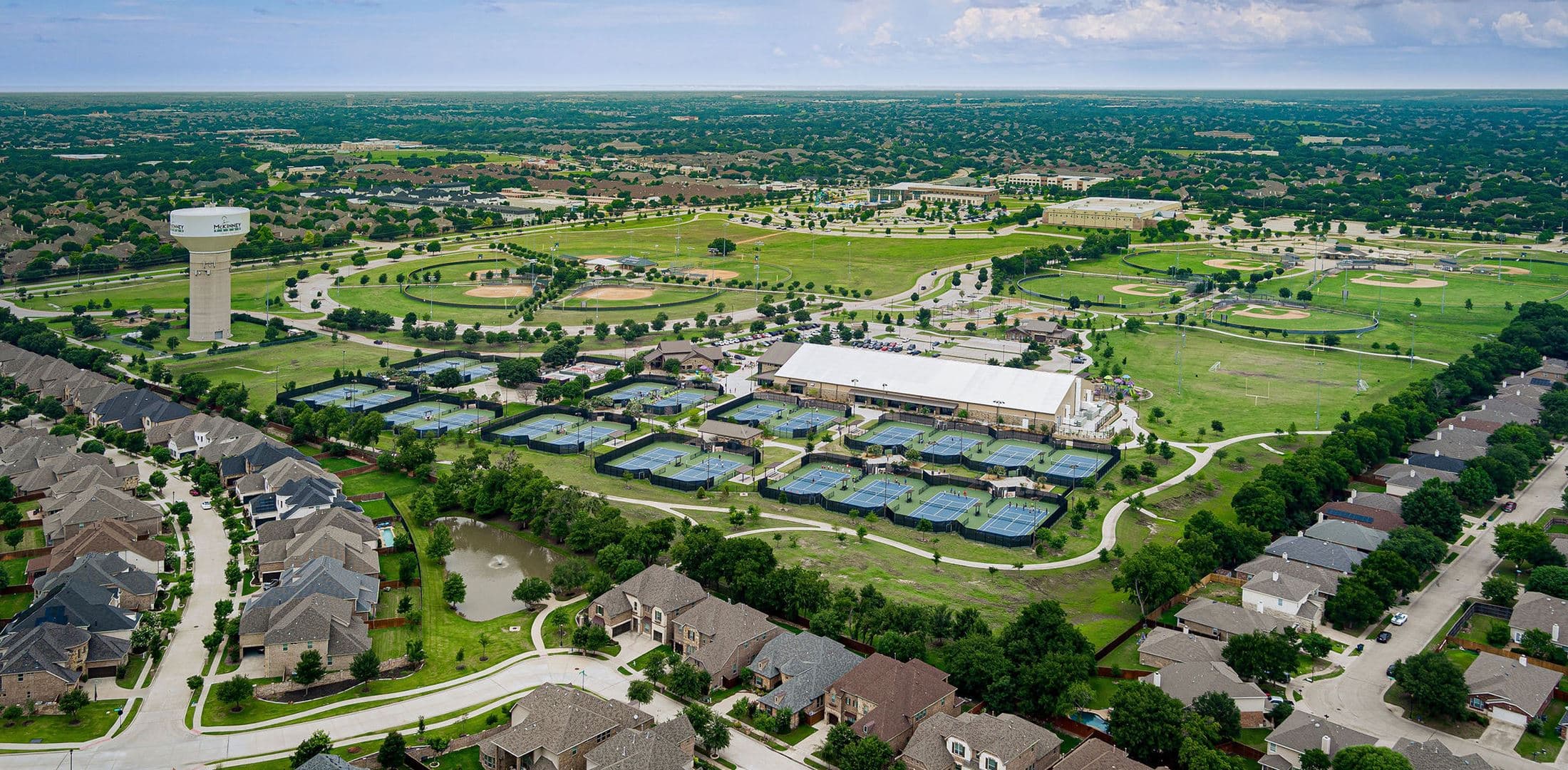
McKinney is one of the fastest-growing cities in the United States and the county seat of Collin County. Its combination of strong residential growth, an expanding commercial market anchored by the US-75 and SH 121 corridors, a historic downtown that is one of the most beloved commercial districts in North Texas, and a growing industrial and logistics base along US-75 makes it one of the most dynamic commercial construction markets in the DFW metroplex.
McKinney is the commercial and governmental center of Collin County, one of the fastest-growing counties in the United States. The city's population has grown tenfold in 35 years, and its commercial market has expanded to match. The US-75 (Central Expressway) corridor is the primary commercial spine, supporting major retail centers, healthcare campuses, corporate office, and industrial development. The SH 121 corridor to the south connects McKinney to Frisco and the broader Legacy-Frisco corporate campus zone and has been a significant driver of higher-intensity commercial growth.
Historic Downtown McKinney is a separately functioning commercial market that has established McKinney as a regional destination for dining, shopping, entertainment, and events. The square and the surrounding blocks of historic commercial buildings support a mix of independent retail, restaurant, wine bar, gallery, and entertainment uses that draw visitors from across the DFW metroplex. Construction in Historic Downtown is subject to the city's historic preservation standards and involves a different review process than commercial development along the highway corridors.
McKinney's industrial market is concentrated in the McKinney National Airport area and along the US-75 industrial corridors. The McKinney National Airport has attracted aviation-adjacent industrial, corporate flight department facilities, and some light manufacturing and warehouse use. The US-75 industrial zone supports distribution, light manufacturing, and owner-user industrial that benefits from the highway's north-south connectivity through Collin County.
The medical office market in McKinney is driven by the Medical City McKinney and Baylor Scott and White Medical Center McKinney hospital campuses, both of which are active anchors for physician practice, specialist group, and ambulatory healthcare development in the surrounding area. Medical construction near these campuses involves the same MEP complexity as hospital-adjacent medical office everywhere — specialized systems, clinical infrastructure, procedure room design — combined with the McKinney planning process for the specific corridor or development zone.
Facility Types We Support In McKinney
McKinney's diverse and rapidly growing commercial market spans major retail, corporate office, medical office, historic downtown renovation, industrial, and neighborhood commercial. Each zone has distinct delivery requirements.
Major Retail and Mixed-Use Commercial
Major retail and mixed-use commercial development along the US-75 and SH 121 corridors in McKinney serves a fast-growing residential base that supports demand for grocery, lifestyle retail, restaurant, and entertainment. These projects range from grocery-anchored centers with pad site development to standalone big-box retail and mixed-use programs that combine retail, office, and residential uses on a single site. We build retail shells and manage multi-phase retail programs with the coordination between tenant input, city design standards, and the construction sequence that large-format retail requires.
Corporate and Medical Office Buildings
Corporate and medical office construction in McKinney serves both the city's own growing employment base and the spillover from the Frisco and Plano corporate corridor. Office buildings along SH 121 and the US-75 frontage are attracting corporate users who value McKinney's lower land cost relative to Frisco and the city's expanding amenity base. Medical office near the hospital campuses requires MEP infrastructure appropriate to clinical use, phased tenant improvement coordination, and building designs that are compatible with the hospital campus environment.
Historic Downtown Renovation and Infill
Historic Downtown McKinney is one of the most active historic district renovation and infill markets in North Texas. The combination of a city committed to historic preservation, a residential population that values the downtown's character, and a regional visitor draw that supports high-volume restaurant and retail operations creates steady demand for building rehabilitation, tenant improvement, and compatible new infill construction. Projects in Historic Downtown require coordination with the city's historic review process, construction methods that protect adjacent historic structures, and tenant improvement designs that work within the constraints of historic building configurations.
Industrial and Airport-Adjacent Facilities
Industrial and warehouse development in McKinney serves the city's growing employment base and benefits from US-75's connectivity through Collin County. Aviation-adjacent industrial near McKinney National Airport serves corporate flight operations and aviation-support businesses that need proximity to the airport's fixed-base operators and runway access. These projects require coordination with the airport's operating authority in addition to the city's standard commercial permitting process.
Neighborhood Commercial and Service Retail
McKinney's rapid residential growth across multiple master-planned communities and established neighborhoods creates ongoing demand for neighborhood commercial — medical and dental offices, grocery-anchored retail, service commercial, restaurant pads, and automotive service — distributed across the city's residential areas. We build neighborhood commercial projects at all scales, from single-tenant owner-user buildings to multi-tenant strip centers, with the same preconstruction discipline we apply to larger programs.
What Owners Should Account For In McKinney
McKinney's rapid growth has created a City of McKinney planning and permitting department that is managing an extremely high volume of commercial permit applications at any given time. Permit review timelines in McKinney can be longer than in neighboring cities of similar size because the volume of applications exceeds the department's standard processing pace during periods of peak growth. Owners should build conservative permit timelines into the project schedule and initiate the permitting process as early as the design is complete enough to support a complete application.
Historic Downtown McKinney's review process involves the city's Historic Preservation Advisory Board, which meets on a regular schedule and requires project submissions well in advance of its meeting dates. Projects in Historic Downtown that need exterior modifications or new construction involving the public street frontage should engage with the city's historic preservation staff early to understand the submission requirements and meeting schedule so that the review timeline can be managed without delaying the construction start.
McKinney's subcontractor market is active and competitive. The combination of residential construction volume, commercial development along the US-75 and SH 121 corridors, and the ongoing master-planned community buildout across the city all draw from the same subcontractor pool. Commercial subcontractors in McKinney — concrete, framing, MEP — have multiple options during periods of high activity, and securing early commitments is essential to protecting the commercial project schedule.
The SH 121 corridor is one of the most actively developing commercial zones in the Dallas-Fort Worth metroplex, with significant new commercial inventory coming online in McKinney and neighboring Frisco simultaneously. Owners developing commercial assets along SH 121 in McKinney should be aware that their building's lease-up is competing against new inventory in both cities, and that their building program — parking ratio, finish quality, accessibility, signage — needs to be positioned to compete in that increasingly supply-rich market.
Who Uses A General Contractor In McKinney
Major Retail and Mixed-Use Developers
Retail developers in McKinney are targeting one of the fastest-growing residential bases in Texas. These developers need delivery schedules aligned with anchor tenant opening commitments and lease commencement dates, and they need a builder who can manage the coordination between multiple tenant improvement scopes, the base building construction sequence, and the city's inspection and certificate of occupancy process.
Healthcare Groups and Medical Office Investors
Healthcare groups expanding into McKinney near the Medical City and Baylor Scott and White campuses need medical office buildings with the clinical infrastructure that specialist tenants require, delivered on a schedule that aligns with the group's planned opening date. We manage medical office delivery with early MEP coordination, parallel procurement of long-lead clinical equipment, and a schedule structure that protects the clinical opening commitment.
Historic Downtown Investors and Developers
Historic Downtown McKinney investors are rehabilitating historic buildings and developing compatible infill that fits the district's architectural character. These projects require a general contractor who understands the historic review process, the construction complexity of existing building rehabilitation, and the tenant improvement requirements of the restaurant, retail, and entertainment uses that dominate the Historic District.
Industrial and Owner-User Operators
Industrial and owner-user operators in McKinney serve the city's growing employment base and benefit from the US-75 connectivity through Collin County. These clients need buildings that function operationally — appropriate clear height, dock or grade-level loading, adequate power capacity — and are delivered by a builder who can navigate the McKinney permitting process efficiently during a period of high application volume.
Scheduling And Delivery In McKinney
Scheduling in McKinney requires conservative permit timeline assumptions during the current growth period. The city's building department is managing high application volume, and review timelines can extend beyond standard expectations when the department's capacity is at its limit. We initiate the permit application as early as the design documents support a complete submission and track the review status actively so that any requests for additional information from the city are addressed immediately without adding queue time.
Historic Downtown projects need to account for the Historic Preservation Advisory Board's meeting schedule. Applications for exterior modifications and new infill construction in the historic district must be submitted well in advance of the board's regular meetings. We engage with the city's historic preservation staff early to understand the submission deadline for the next available meeting and ensure that the application is complete and ready well before that deadline.
For major retail and mixed-use programs, the schedule structure needs to accommodate the sequencing of multiple tenant improvement scopes within a base building that is still under construction in some areas. We define the phasing boundaries early, establish clear turnover conditions for each phase, and maintain the separation between construction zones and occupied areas throughout the project so that tenants can open on schedule without compromising the adjacent construction environment.
Nearby Markets Connected To McKinney
McKinney connects to Prosper to the west, Allen to the south, and Melissa and Celina to the north. The SH 121 corridor connects McKinney to Frisco to the southwest, and the US-75 corridor connects it to Plano and Dallas to the south. We work across all of these markets and apply consistent delivery standards regardless of which Collin County city the work is in.
Owners comparing McKinney against Frisco for office and retail investment are evaluating two cities with different land cost profiles, different permitting environments, and different stages in their commercial development cycles. Frisco has the more established corporate campus market; McKinney has the more affordable land and the active Historic Downtown amenity that Frisco doesn't have. We help owners navigate that comparison with current market knowledge.
For healthcare groups specifically, McKinney's two hospital campuses make it one of the most active medical office markets in north Collin County. The competition for quality medical office sites near Medical City McKinney and Baylor Scott and White is active, and owners who move quickly to secure sites and start construction are positioned to capture the first-mover advantage before adjacent inventory is complete.
Services commonly delivered in McKinney
Commercial Construction
Ground-up commercial construction for owner-users, developers, and portfolio groups across Denton County — built around UNT corridor demand, Peterbilt-era industrial heritage, and the fast-growing US-380 exurban belt.
View serviceMixed-Use Commercial Construction
Mixed-use commercial construction for Denton County developers combining retail, restaurant, residential, and office in one building program — downtown Denton Square revival, UNT-adjacent student mixed-use, and US-380 corridor community center development.
View serviceOffice Building Construction
Office building construction for Denton County corporate owners, developers, and institutional users — from UNT-adjacent professional office to corporate headquarters and medical office campus delivery.
View serviceWarehouse Construction
Warehouse construction for distribution, logistics, and storage operations along Denton's I-35 corridor and the US-380 growth belt — built for reliable shell performance and tenant-ready delivery.
View serviceParking Lot Construction
Parking lot construction for commercial, retail, industrial, and institutional properties across Denton County — subgrade preparation, pavement section design, and drainage coordinated for North Texas climate performance.
View serviceNearby markets
Denton
Denton is the county seat and economic center of Denton County — home to the University of North Texas (46,000+ students), Texas Woman's University, Peterbilt Motors, Sally Beauty Holdings, and a manufacturing base that has anchored the north DFW economy for generations. Commercial and industrial construction here serves a market shaped by university growth, established corporate campus programs, and the ongoing US-380 corridor explosion that is pulling new development east and west of the city.
Explore marketCorinth
Corinth sits at the southern end of Denton County along I-35E, positioned between Denton and the Lewisville Lake recreation zone with direct highway access to the Dallas–Fort Worth core. The city has attracted retail, office, and service commercial development serving the south Denton County residential base, and its I-35E frontage creates industrial and logistics potential that the surrounding residential growth is beginning to activate.
Explore marketLake Dallas
Lake Dallas is a small city on I-35E at the Lewisville Lake shoreline, serving as a commercial service node for the lake-adjacent residential communities of south Denton County. Commercial construction here is primarily service commercial, retail, and light industrial — serving the lakefront population and the I-35E traffic corridor between Denton and Lewisville.
Explore marketHickory Creek
Hickory Creek is a small south Denton County city on I-35E between Lake Dallas and Highland Village, positioned at the Lewisville Lake-adjacent zone where highway-facing commercial development serves the south Denton County residential market and the lake-adjacent recreation economy. Commercial construction opportunities focus on I-35E corridor retail, service commercial, and light industrial.
Explore marketArgyle
Argyle is southwestern Denton County's premier address — an Argyle ISD community anchored by the Robson Ranch 55+ master-planned community and the equestrian estate properties along the I-35W corridor. Commercial construction here serves a high-income residential base, equestrian facilities, and the growing US-377 commercial zone serving south Denton County's most affluent market segment.
Explore marketFrequently asked questions
How has McKinney's growth affected its commercial construction market?
McKinney has grown from 20,000 residents in 1990 to over 220,000 today, and its commercial market has expanded to match that residential growth. The city is now managing one of the highest volumes of commercial permit applications in Collin County, which creates competitive subcontractor markets and longer permit review timelines during peak growth periods. Owners need to account for both of these factors when planning commercial projects in McKinney.
What makes Historic Downtown McKinney a significant commercial construction market?
Historic Downtown McKinney is a regional destination for dining, retail, and entertainment that draws visitors from across the DFW metroplex. The sustained visitor draw and the city's commitment to historic preservation have created steady demand for building rehabilitation, tenant improvement, and compatible infill construction. Projects here require the city's historic preservation review process, which adds time to the permit cycle and requires specific documentation and design compatibility.
How does McKinney National Airport affect industrial development in the area?
The McKinney National Airport supports aviation-adjacent industrial, corporate flight department facilities, and some light manufacturing and warehouse use near the airport boundary. Industrial projects near the airport require coordination with the airport's operating authority in addition to the city's commercial permitting process. The airport also creates TxDOT and FAA considerations for building heights near the runway approach and departure paths.
How does McKinney compare to Frisco for commercial investment?
Frisco has the established Legacy-area spillover corporate campus market, higher land costs, and a more mature commercial infrastructure. McKinney has more affordable land, a growing commercial market, Historic Downtown as a unique amenity, and strong residential growth north of Frisco that creates expanding commercial demand. Both cities are active commercial investment markets; the right choice depends on the project type and the investor's timeline.
Can General Contractors of Denton manage commercial construction in Historic Downtown McKinney?
Yes. We have managed renovation and tenant improvement projects in historic districts and understand the Historic Preservation Advisory Board review process, the construction methods required to protect adjacent historic structures, and the tenant improvement requirements of the restaurant, retail, and entertainment uses that dominate Historic Downtown McKinney.
What is the advantage of using General Contractors of Denton in McKinney?
We work in McKinney across multiple commercial zones — US-75 corridor, SH 121, Historic Downtown, and the residential growth corridors — under consistent delivery standards. We understand McKinney's permit review dynamics during its growth period and know how to structure the pre-construction process to minimize the permit timeline delays that frequently affect commercial projects in high-activity markets.